
News
2026
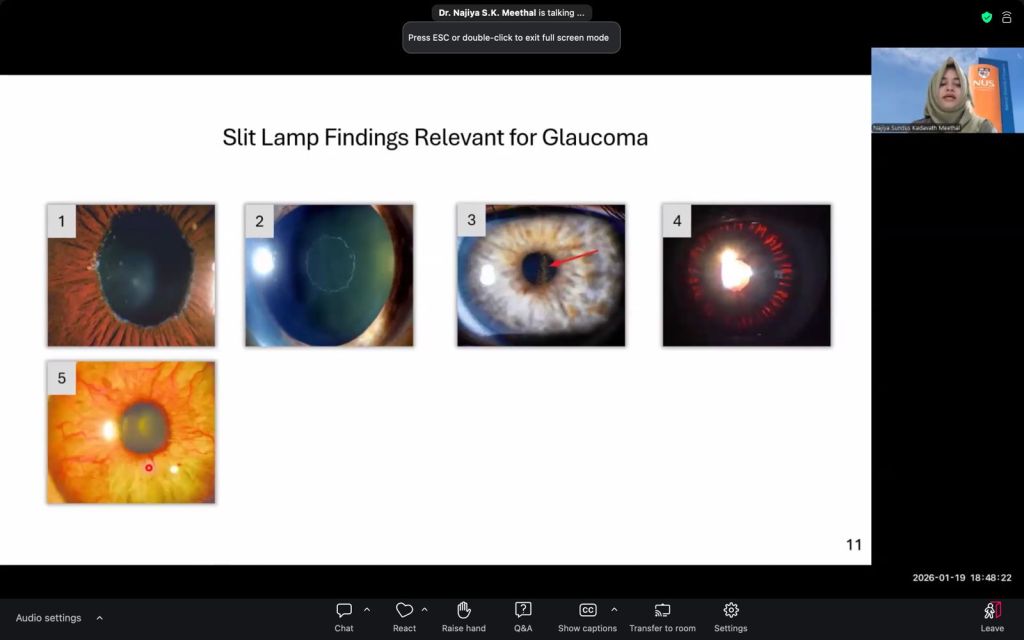
Guidance on Glaucoma Assessment in Primary Eye Care Settings: Successful Webinar by Dr Najiya S.K. Meethal| January 2026
Prof Gronfier is internationally recognised for his work on circadian biology and the impact of light on human physiology. In his talk, he discussed how light influences not only our circadian rhythms but also a range of non-circadian functions, shaping everything from alertness and cognition to long-term health outcomes.
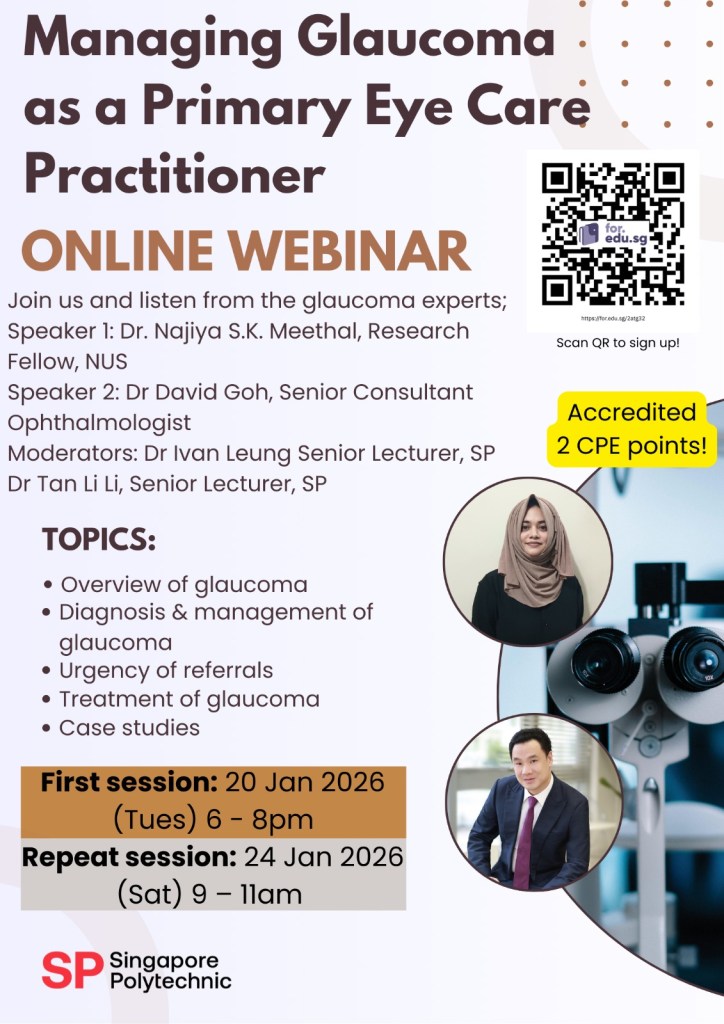
The Eye N Brain Research Group, in collaboration with Singapore Polytechnic, successfully conducted an online webinar titled “Managing Glaucoma as a Primary Eye Care Practitioner”, aimed at strengthening clinical knowledge and practical skills among primary eye care professionals.
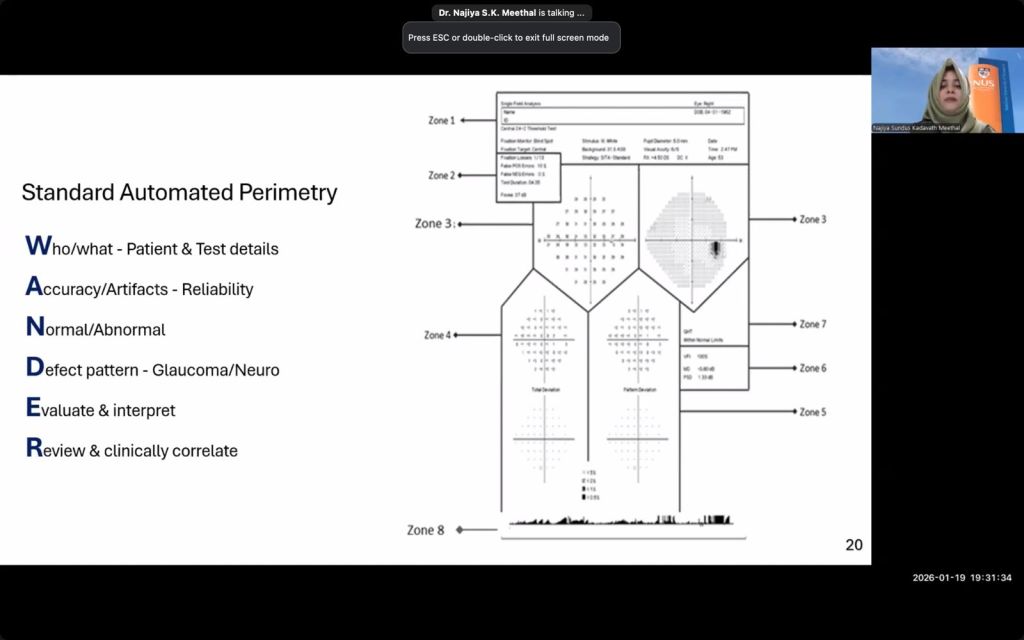
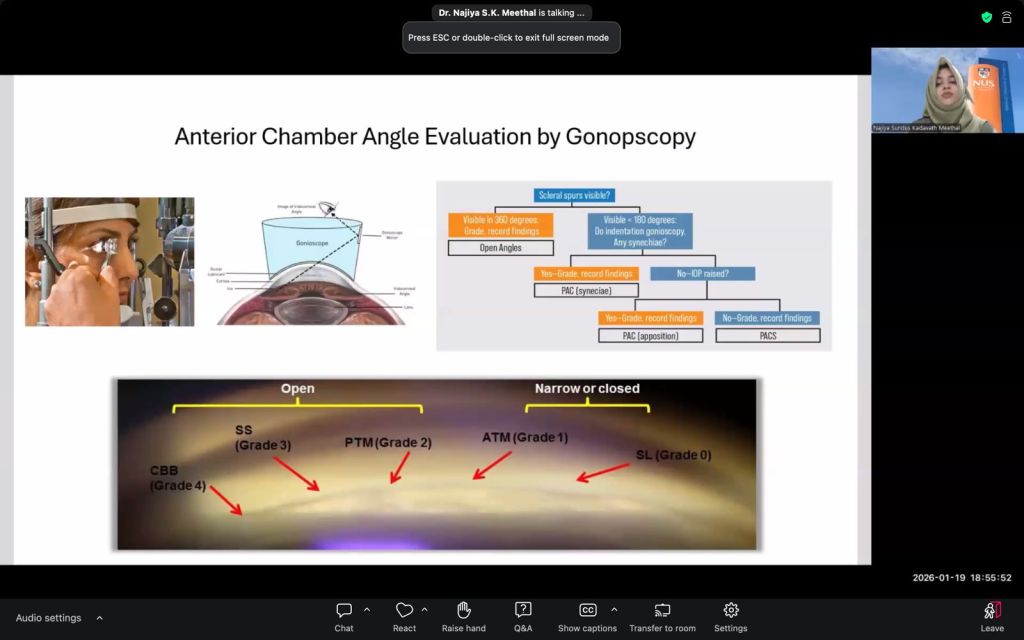
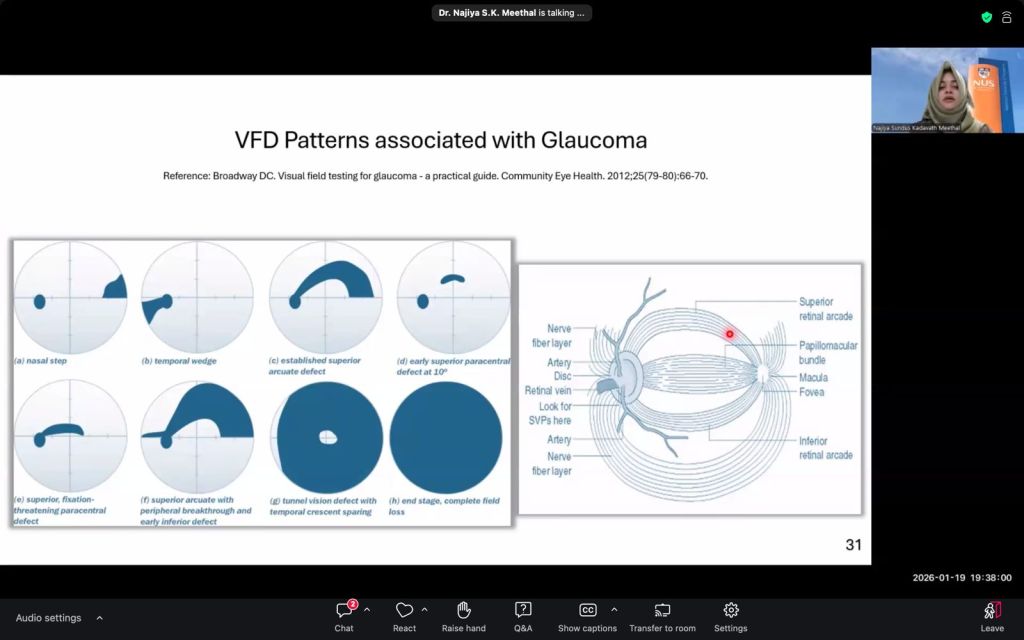
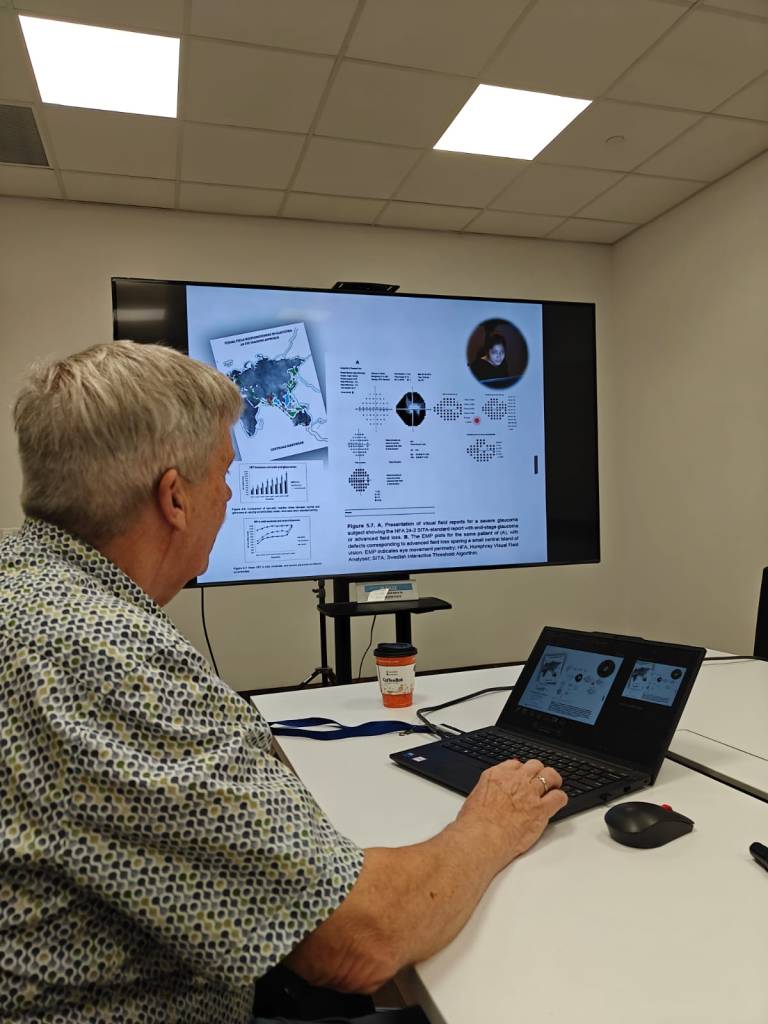
One of the key highlights of the webinar was the insightful presentation by Dr Najiya S.K. Meethal, Research Fellow at the National University of Singapore (NUS). Dr Najiya provided a comprehensive overview of glaucoma assessment, with a strong focus on clinically relevant slit lamp findings essential for early detection and effective management by primary eye care practitioners.
Her session covered important diagnostic indicators, including anterior segment changes associated with glaucoma, structural abnormalities visible on slit lamp examination, clinical signs guiding the urgency of referral, and real-world case examples to enhance clinical decision-making.
Participants also benefited from expert input by Dr David Goh, Senior Consultant Ophthalmologist, who shared practical treatment strategies and management pathways for glaucoma patients. The webinar was moderated by Dr Tan Li Li, Senior Lecturer at Singapore Polytechnic, and organised by Ms Jocelyn Chua from the Diploma of Optometry, Singapore Polytechnic. Their efforts ensured smooth coordination and engaging discussions throughout the sessions.
This successful event reflects our ongoing commitment to bridging research and clinical practice, empowering eye care practitioners with up-to-date knowledge to improve patient outcomes. We look forward to hosting more educational initiatives in the near future.
Anterior segment changes associated with glaucoma
The session drew a keen audience of researchers and students, who actively engaged during the Q&A segment. His insights sparked discussions on how these findings could be applied in vision research, clinical practice, and even everyday life.
The World Sleep Congress is one of the largest international gatherings dedicated to advancing knowledge in sleep science, medicine, and technology. It brings together researchers, clinicians, and innovators from across the globe to exchange insights and showcase new discoveries in the field.
During the congress, Daniella had the opportunity to engage with experts in the field, receive valuable feedback on her work, and contribute to the growing conversation around light-based strategies for sleep and circadian health.
Dr. Raymond Najjar delivered a compelling talk on the impact of light exposure on myopia progression, shedding light on how environmental and optical factors shape visual development—a timely topic as myopia rates continue to rise worldwide.
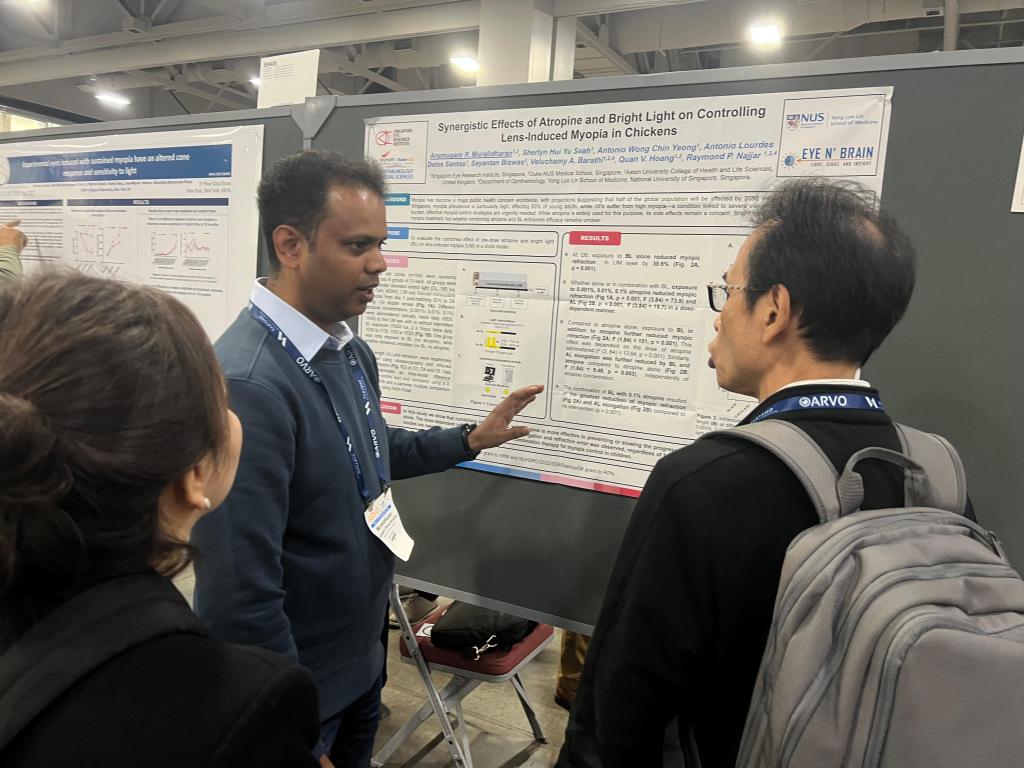
Our team was also proud to showcase two impactful poster presentations. Dr. Murali presented his work on the synergistic effects of atropine and bright light in controlling lens-induced myopia in chickens, offering new insights into potential interventions for childhood myopia. PhD student Daniella Mahfoud presented her research on pupillometric features of ocular recovery following transsphenoidal surgery in patients with pituitary adenoma, highlighting the clinical value of pupillometry in tracking visual function and recovery.
During the session, Mr. Paolini highlighted how programmable spectrum sources offer multiple solutions for achieving the same correlated color temperature (CCT). He emphasized that daylight is the gold standard for lighting but also a complex and continuously changing spectrum. He explained that while daylight locus is sometimes representative of daylight, it does not fully capture its variability.
Mr. Paolini also pointed out that daylight CCTs are significantly higher than most electric lights, even during sunrise and sunset. He stressed the importance of deep red wavelengths (>650nm) for high CCT acceptance and accurate skin color representation. Lastly, he underscored the need to focus on radiometry, as photometry alone is insufficient for understanding daylight.Photo credits: Ms Janie Tay
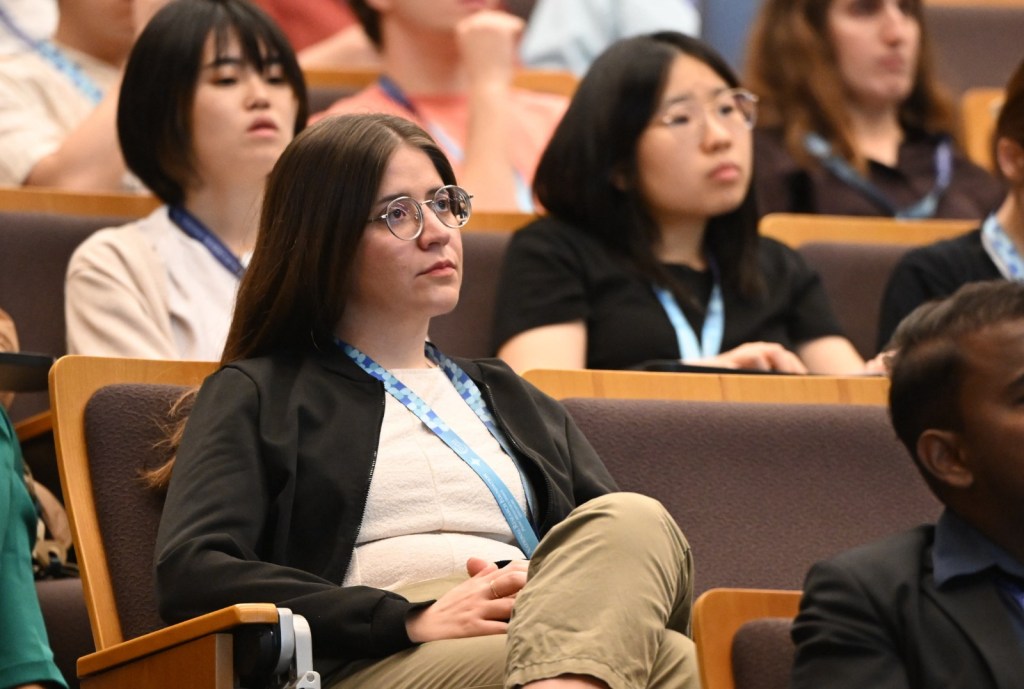
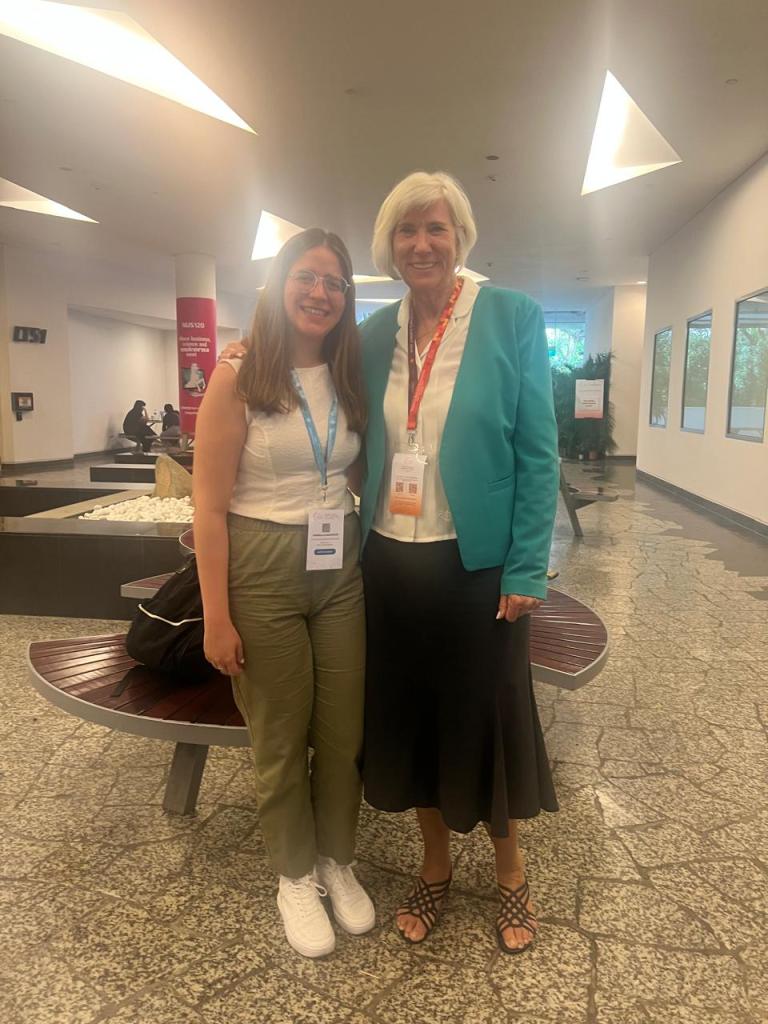
PhD Student Daniella Mahfoud at Global Young Scientists Summit 2026| January 2026
Prof Gronfier is internationally recognised for his work on circadian biology and the impact of light on human physiology. In his talk, he discussed how light influences not only our circadian rhythms but also a range of non-circadian functions, shaping everything from alertness and cognition to long-term health outcomes.
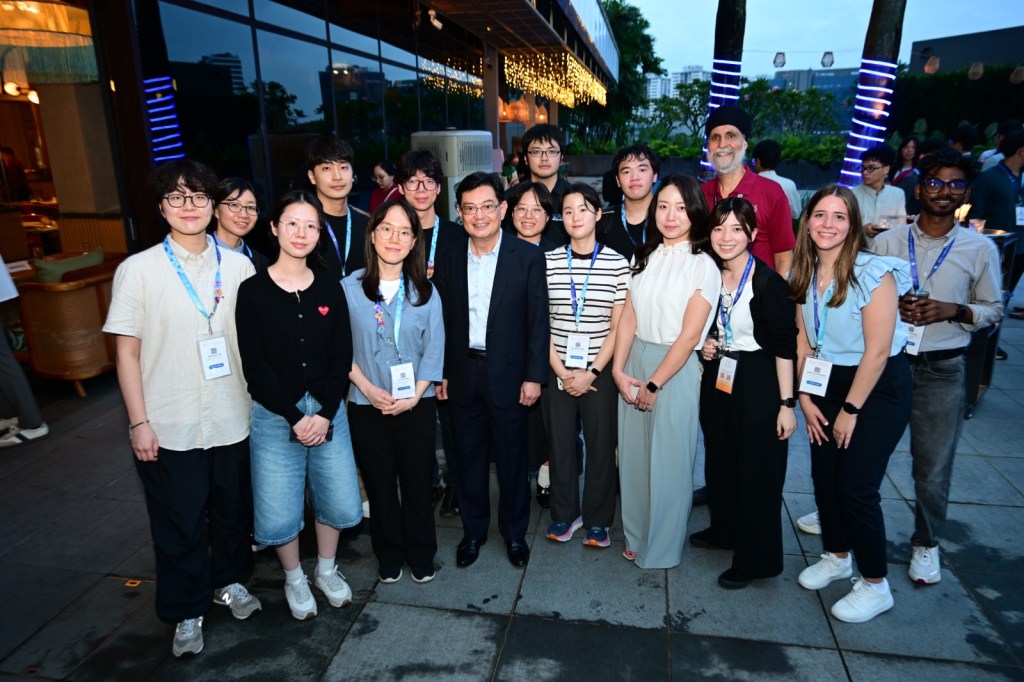
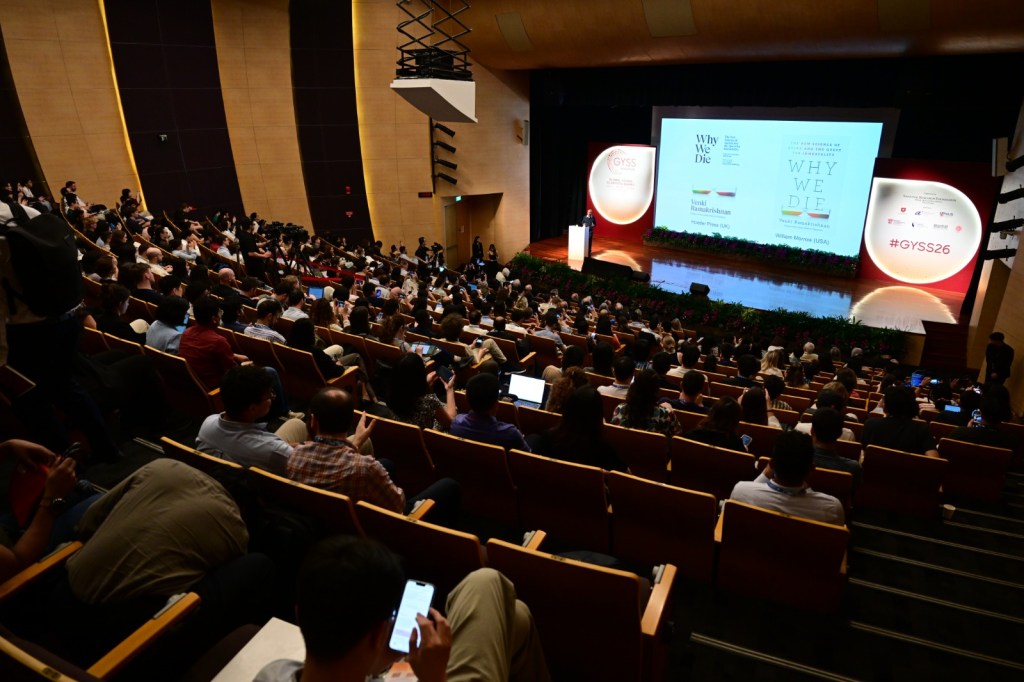
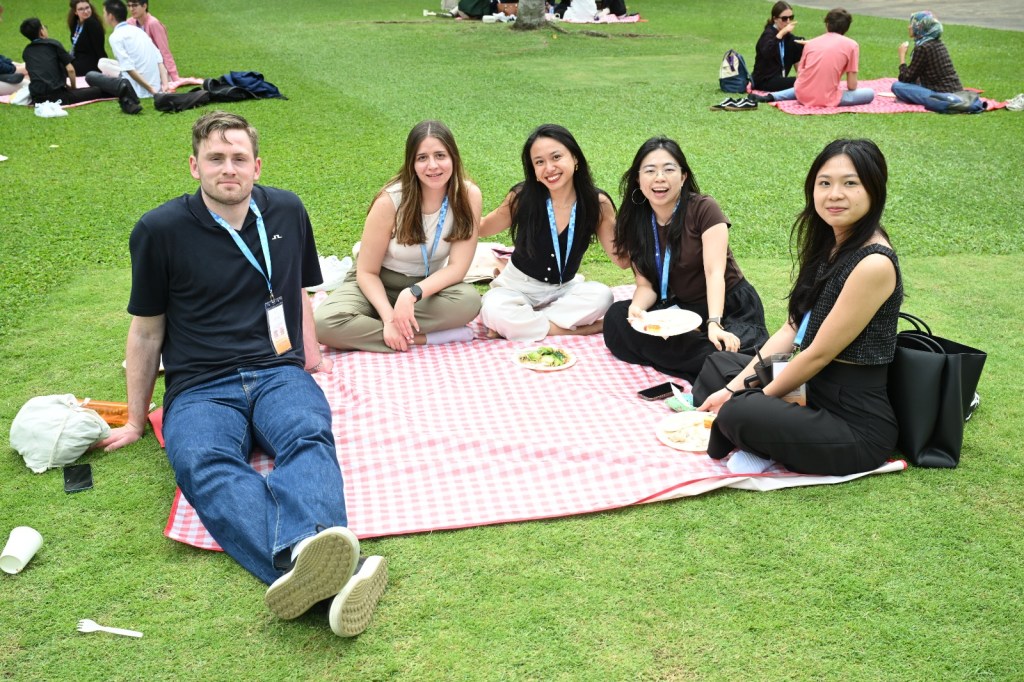
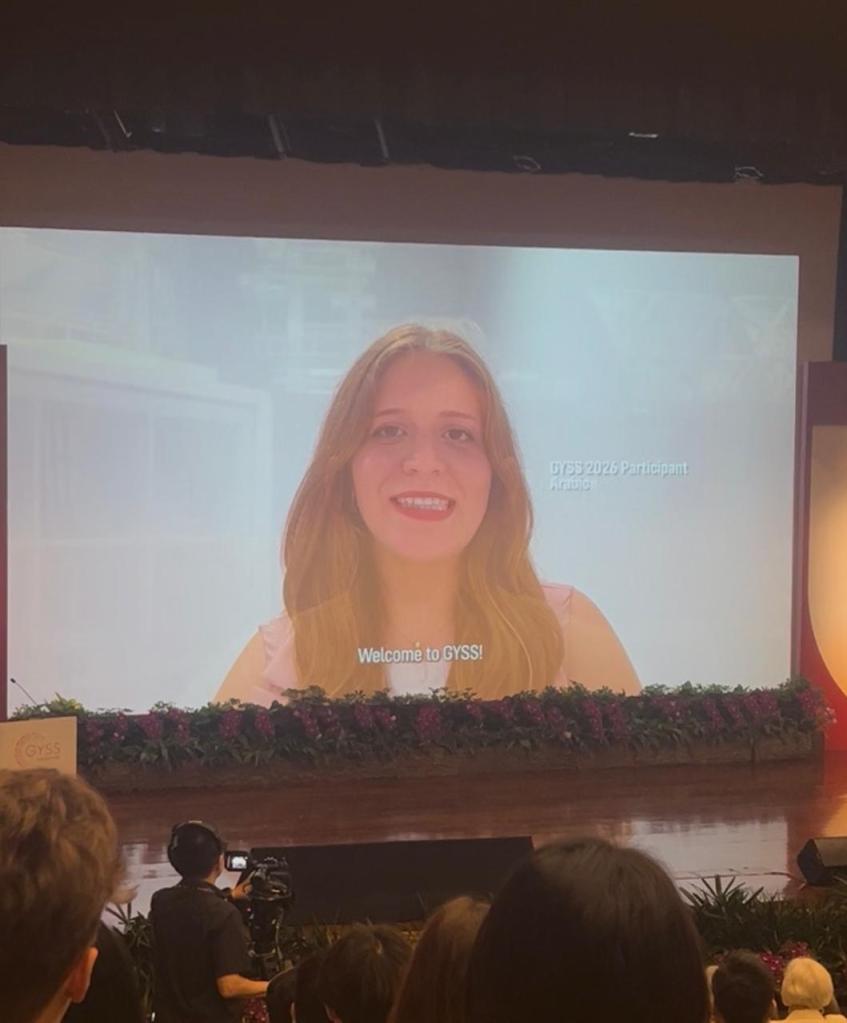
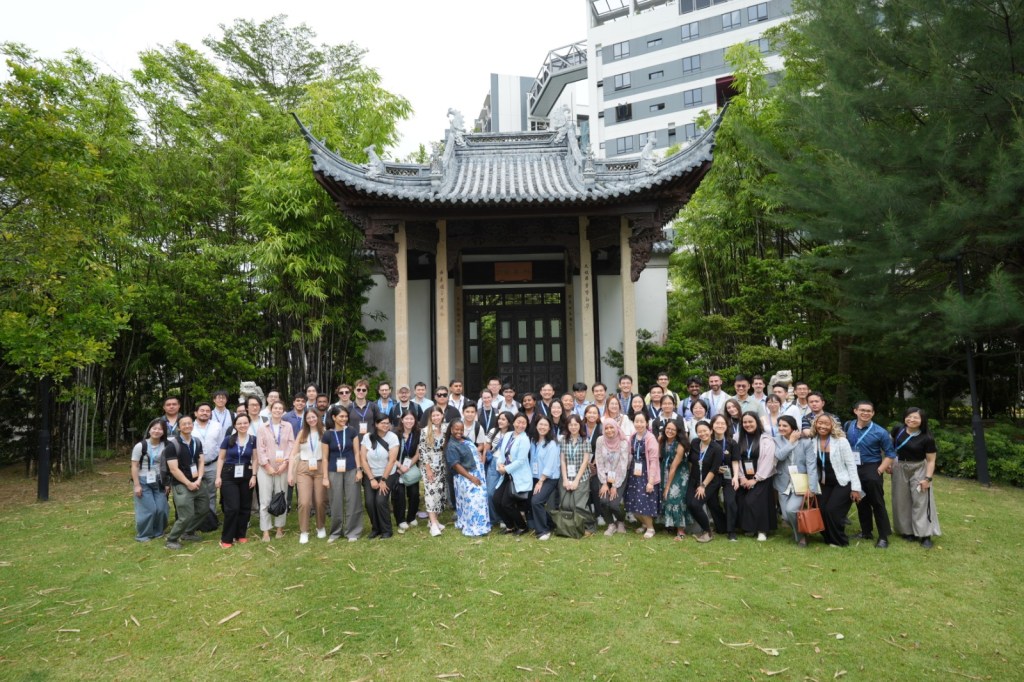
Daniella, PhD candidate at the Eye & Brain Research Group, was selected to participate in the Global Young Scientists Summit (GYSS) 2026, a prestigious international forum that brought together 409 young scientists from 57 countries and 21 internationally renowned laureates, including Nobel Prize and Turing Award recipients.
GYSS 2026 provided a unique platform for interdisciplinary exchange, scientific dialogue, and leadership development, enabling early-career researchers to engage with global scientific leaders on topics spanning discovery, innovation, and societal impact. The programme began with site visits across Singapore’s research ecosystem, including the ASTAR Genome Institute of Singapore (ASTAR GIS) and the Singapore University of Technology and Design (SUTD), offering insights into institutional collaboration and research translation.
Throughout the summit, participants engaged in lectures, panel discussions, and small-group conversations that emphasised the importance of scientific integrity, resilience, meaningful impact, and cross-disciplinary collaboration. Informal discussions with peers from diverse scientific backgrounds further enriched the experience, fostering connections across disciplines and career stages.
The session drew a keen audience of researchers and students, who actively engaged during the Q&A segment. His insights sparked discussions on how these findings could be applied in vision research, clinical practice, and even everyday life.
The World Sleep Congress is one of the largest international gatherings dedicated to advancing knowledge in sleep science, medicine, and technology. It brings together researchers, clinicians, and innovators from across the globe to exchange insights and showcase new discoveries in the field.
During the congress, Daniella had the opportunity to engage with experts in the field, receive valuable feedback on her work, and contribute to the growing conversation around light-based strategies for sleep and circadian health.
Dr. Raymond Najjar delivered a compelling talk on the impact of light exposure on myopia progression, shedding light on how environmental and optical factors shape visual development—a timely topic as myopia rates continue to rise worldwide.
Our team was also proud to showcase two impactful poster presentations. Dr. Murali presented his work on the synergistic effects of atropine and bright light in controlling lens-induced myopia in chickens, offering new insights into potential interventions for childhood myopia. PhD student Daniella Mahfoud presented her research on pupillometric features of ocular recovery following transsphenoidal surgery in patients with pituitary adenoma, highlighting the clinical value of pupillometry in tracking visual function and recovery.
During the session, Mr. Paolini highlighted how programmable spectrum sources offer multiple solutions for achieving the same correlated color temperature (CCT). He emphasized that daylight is the gold standard for lighting but also a complex and continuously changing spectrum. He explained that while daylight locus is sometimes representative of daylight, it does not fully capture its variability.
Mr. Paolini also pointed out that daylight CCTs are significantly higher than most electric lights, even during sunrise and sunset. He stressed the importance of deep red wavelengths (>650nm) for high CCT acceptance and accurate skin color representation. Lastly, he underscored the need to focus on radiometry, as photometry alone is insufficient for understanding daylight.Photo credits: Ms Janie Tay
Prof. Johannes van der Steen Visits Eye & Brain| January 2026
Prof Gronfier is internationally recognised for his work on circadian biology and the impact of light on human physiology. In his talk, he discussed how light influences not only our circadian rhythms but also a range of non-circadian functions, shaping everything from alertness and cognition to long-term health outcomes.
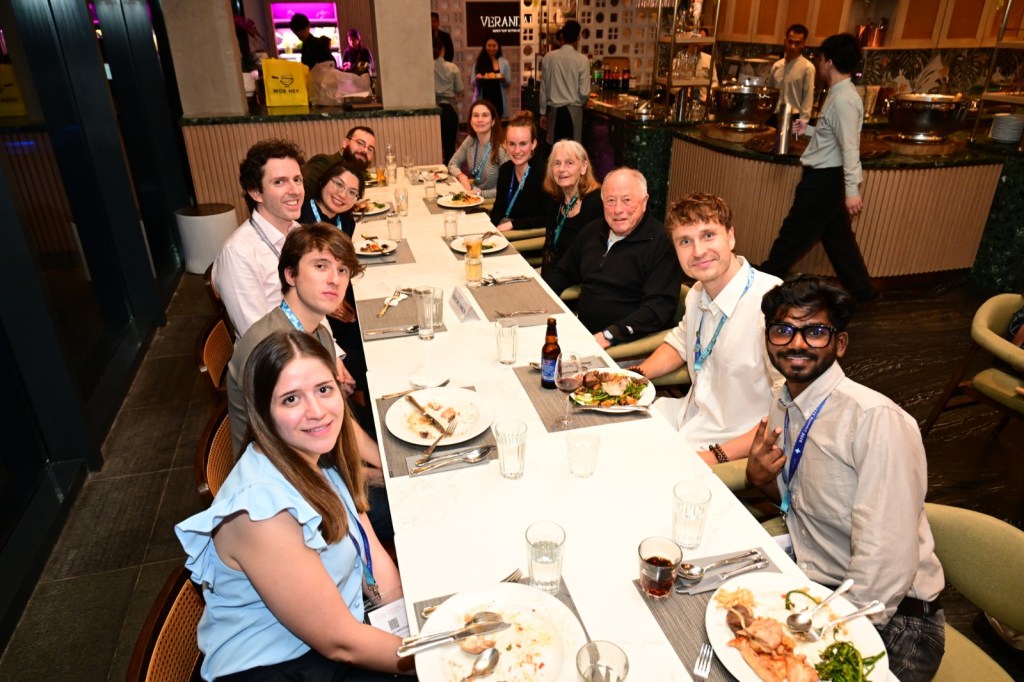
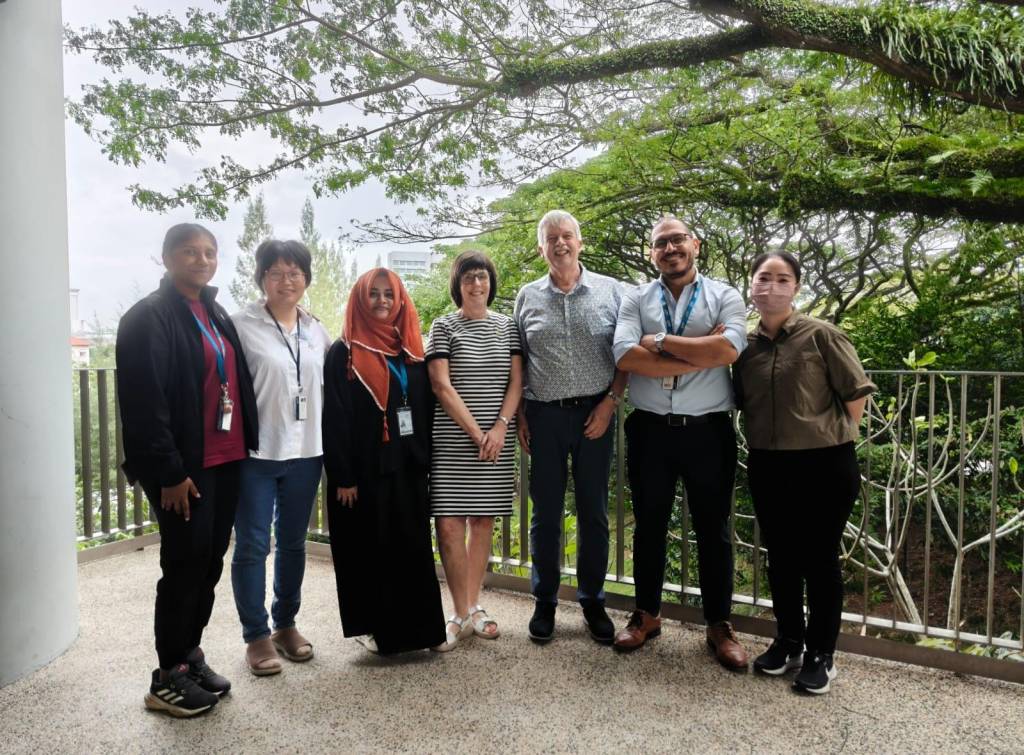
Eye & Brain was delighted to welcome Prof. Dr. Johannes van der Steen, former Chair of Visual Information Processing. Until 2021, Prof. van der Steen was a Full Professor in the Department of Neuroscience at Erasmus MC, Rotterdam, where he made outstanding contributions to oculomotor and vestibular physiology through over 120 research publications and book chapters and through the mentorship of numerous PhD, research master, and early‑career researchers. We were also honoured to welcome his wife, Sanny van der Steen, who remains actively interested in ophthalmology and rehabilitation projects.
Drawing on his 40-year research journey, Prof. van der Steen highlighted how visual information processing develops from early life through adulthood and ageing, and how disruptions in these processes can contribute to visual and neurological conditions. He illustrated how eye movement research offers valuable insights into visual perception and supports clinical assessment, sparking thoughtful discussions among our researchers and clinicians.
The visit held special significance for our team, as our Research Fellow, Dr. Najiya, had previously been a student of Prof. van der Steen. Their reunion was a wonderful reminder of the lasting impact of mentorship and the continuity of research across generations.
We sincerely thank Prof. Johannes van der Steen for sharing his time, expertise, and insights with us. It was truly an honour to host him, and we look forward to future opportunities for collaboration.
The session drew a keen audience of researchers and students, who actively engaged during the Q&A segment. His insights sparked discussions on how these findings could be applied in vision research, clinical practice, and even everyday life.
The World Sleep Congress is one of the largest international gatherings dedicated to advancing knowledge in sleep science, medicine, and technology. It brings together researchers, clinicians, and innovators from across the globe to exchange insights and showcase new discoveries in the field.
During the congress, Daniella had the opportunity to engage with experts in the field, receive valuable feedback on her work, and contribute to the growing conversation around light-based strategies for sleep and circadian health.
Dr. Raymond Najjar delivered a compelling talk on the impact of light exposure on myopia progression, shedding light on how environmental and optical factors shape visual development—a timely topic as myopia rates continue to rise worldwide.
Our team was also proud to showcase two impactful poster presentations. Dr. Murali presented his work on the synergistic effects of atropine and bright light in controlling lens-induced myopia in chickens, offering new insights into potential interventions for childhood myopia. PhD student Daniella Mahfoud presented her research on pupillometric features of ocular recovery following transsphenoidal surgery in patients with pituitary adenoma, highlighting the clinical value of pupillometry in tracking visual function and recovery.
During the session, Mr. Paolini highlighted how programmable spectrum sources offer multiple solutions for achieving the same correlated color temperature (CCT). He emphasized that daylight is the gold standard for lighting but also a complex and continuously changing spectrum. He explained that while daylight locus is sometimes representative of daylight, it does not fully capture its variability.
Mr. Paolini also pointed out that daylight CCTs are significantly higher than most electric lights, even during sunrise and sunset. He stressed the importance of deep red wavelengths (>650nm) for high CCT acceptance and accurate skin color representation. Lastly, he underscored the need to focus on radiometry, as photometry alone is insufficient for understanding daylight.Photo credits: Ms Janie Tay

2025
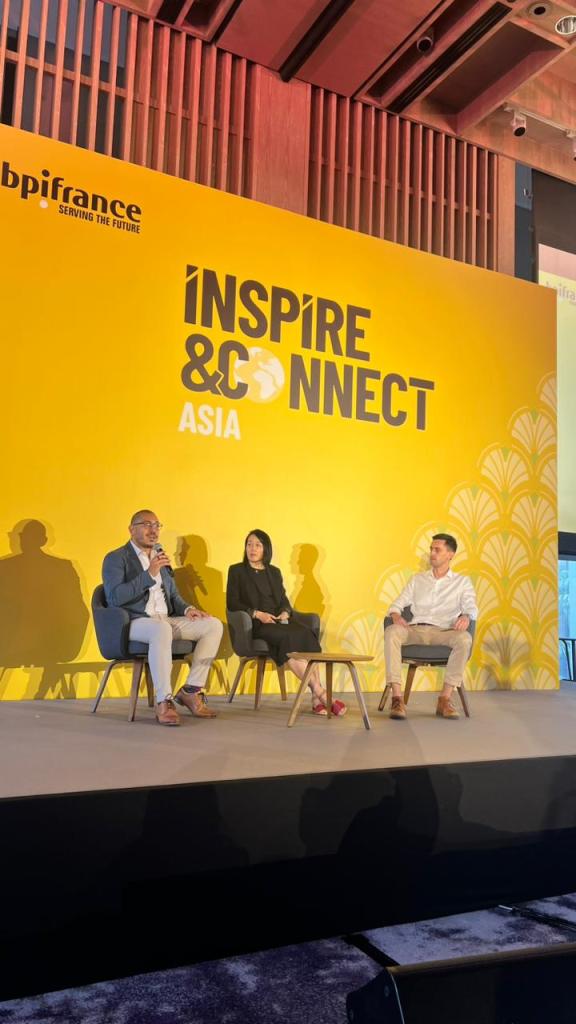
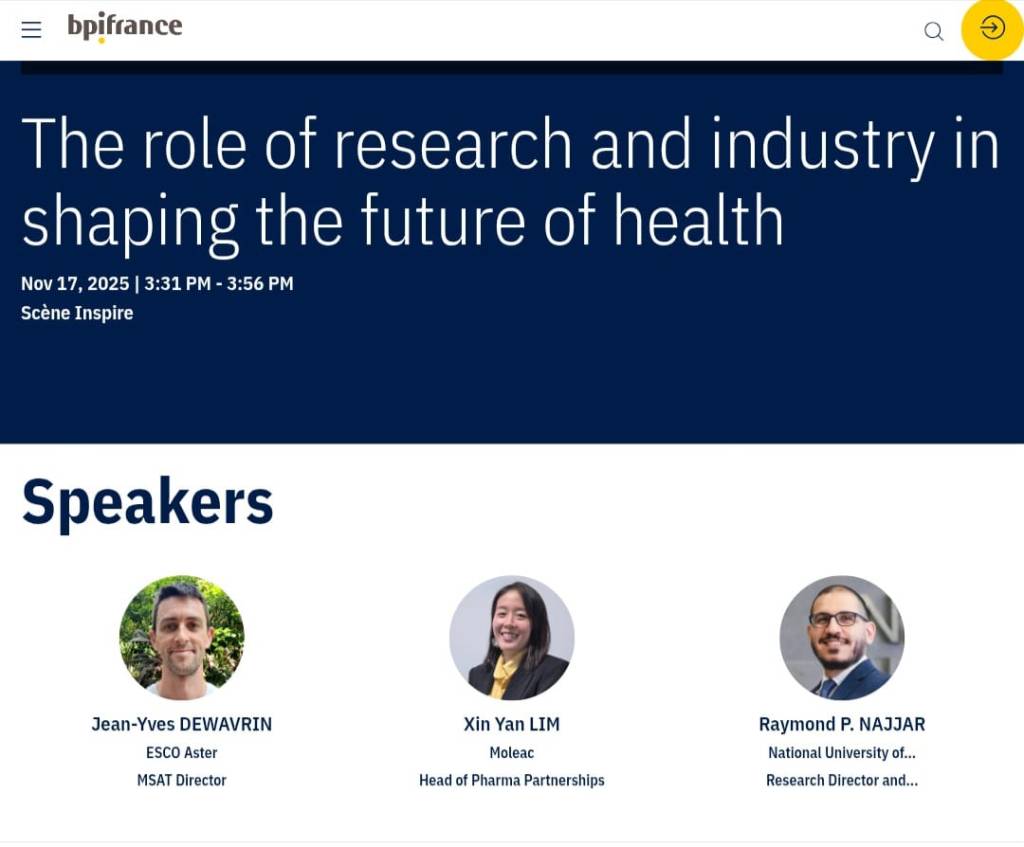
Inspire & Connect 2025 – The role of research and industry in shaping the future of health| November 2025
Prof Gronfier is internationally recognised for his work on circadian biology and the impact of light on human physiology. In his talk, he discussed how light influences not only our circadian rhythms but also a range of non-circadian functions, shaping everything from alertness and cognition to long-term health outcomes.
The experts delve into the transformative potential of AI and quantum technology in the fields of healthcare and security. The discussion highlights the critical role of collaboration between academia and industry in driving innovation and addressing global challenges.
Key speakers include Xin Yan LIM from Moleac, a pharmaceutical company innovating in post-stroke recovery, and Raymond P. NAJJAR, a visual neuroscientist exploring the use of eye technology to detect brain diseases and mood disorders. They emphasize the importance of Singapore as a vibrant hub for research and industry partnerships, offering a conducive environment for technological advancements.
The conversation also touches on the need for integrated ecosystems where scientists, engineers, and industry players work together from the outset to ensure impactful outcomes. This video is a must-watch for anyone interested in the future of healthcare technology and the collaborative efforts needed to bring these innovations to life.
The session drew a keen audience of researchers and students, who actively engaged during the Q&A segment. His insights sparked discussions on how these findings could be applied in vision research, clinical practice, and even everyday life.
The World Sleep Congress is one of the largest international gatherings dedicated to advancing knowledge in sleep science, medicine, and technology. It brings together researchers, clinicians, and innovators from across the globe to exchange insights and showcase new discoveries in the field.
During the congress, Daniella had the opportunity to engage with experts in the field, receive valuable feedback on her work, and contribute to the growing conversation around light-based strategies for sleep and circadian health.
Dr. Raymond Najjar delivered a compelling talk on the impact of light exposure on myopia progression, shedding light on how environmental and optical factors shape visual development—a timely topic as myopia rates continue to rise worldwide.
Our team was also proud to showcase two impactful poster presentations. Dr. Murali presented his work on the synergistic effects of atropine and bright light in controlling lens-induced myopia in chickens, offering new insights into potential interventions for childhood myopia. PhD student Daniella Mahfoud presented her research on pupillometric features of ocular recovery following transsphenoidal surgery in patients with pituitary adenoma, highlighting the clinical value of pupillometry in tracking visual function and recovery.
During the session, Mr. Paolini highlighted how programmable spectrum sources offer multiple solutions for achieving the same correlated color temperature (CCT). He emphasized that daylight is the gold standard for lighting but also a complex and continuously changing spectrum. He explained that while daylight locus is sometimes representative of daylight, it does not fully capture its variability.
Mr. Paolini also pointed out that daylight CCTs are significantly higher than most electric lights, even during sunrise and sunset. He stressed the importance of deep red wavelengths (>650nm) for high CCT acceptance and accurate skin color representation. Lastly, he underscored the need to focus on radiometry, as photometry alone is insufficient for understanding daylight.Photo credits: Ms Janie Tay

Keynote lecture at the Singapore Optometry Association Conference 2026| October 2025
Prof Gronfier is internationally recognised for his work on circadian biology and the impact of light on human physiology. In his talk, he discussed how light influences not only our circadian rhythms but also a range of non-circadian functions, shaping everything from alertness and cognition to long-term health outcomes.
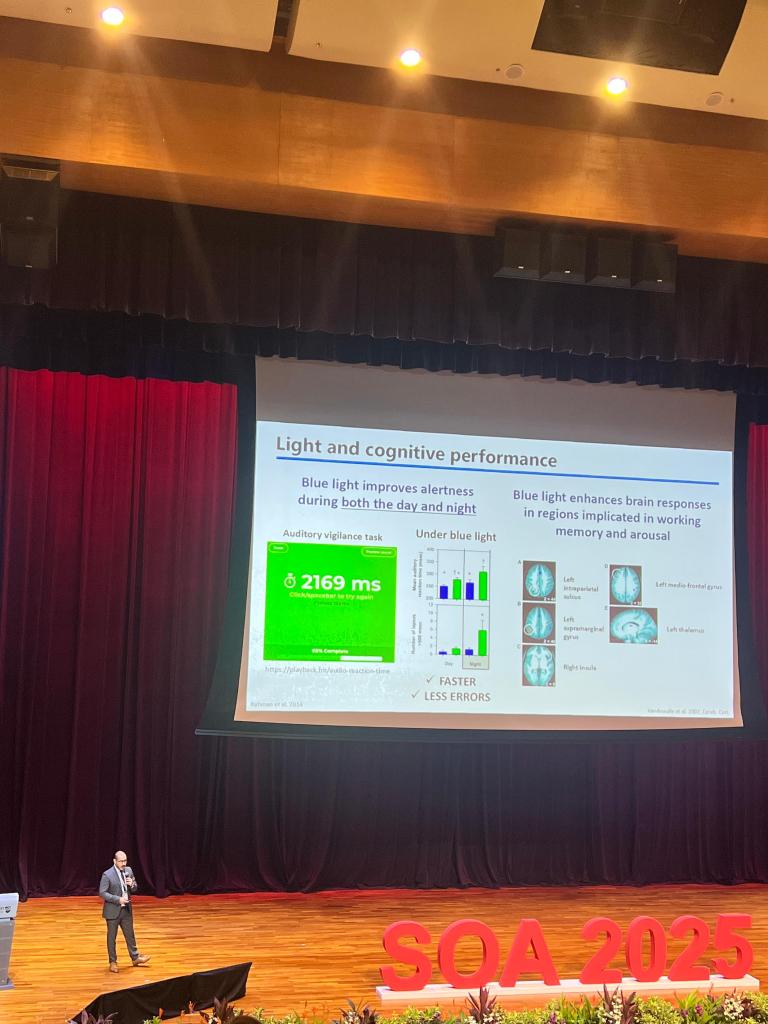
Dr. Raymond P. Najjar was invited to deliver the keynote lecture at the Singapore Optometry Association Conference 2026, presenting a forward-looking talk titled “The Eye as a Gateway to Brain and Systemic Health: A Vision Beyond ‘Vision’.”
In his address, Dr. Najjar highlighted the expanding understanding of the eye as a critical interface between light, the brain, and whole-body health. He emphasised that light entering the eye has far-reaching effects—shaping mood, cognitive performance, sleep quality, and the synchronisation of the circadian system.
Dr. Najjar also underscored the growing role of the eye in disease detection. With advances in retinal imaging and artificial intelligence, the eye is rapidly becoming a powerful window into ocular, systemic, and neurological conditions, enabling earlier and more precise diagnosis.
Dr. Najjar also underscored the growing role of the eye in disease detection. With advances in retinal imaging and artificial intelligence, the eye is rapidly becoming a powerful window into ocular, systemic, and neurological conditions, enabling earlier and more precise diagnosis.
His keynote offered a compelling vision: that modern eye care extends far beyond sight, positioning the eye as both a regulator of health and a non-invasive biomarker for disease. His work continues to push the boundaries of how light and the visual system can be harnessed to improve human health.
The session drew a keen audience of researchers and students, who actively engaged during the Q&A segment. His insights sparked discussions on how these findings could be applied in vision research, clinical practice, and even everyday life.
The World Sleep Congress is one of the largest international gatherings dedicated to advancing knowledge in sleep science, medicine, and technology. It brings together researchers, clinicians, and innovators from across the globe to exchange insights and showcase new discoveries in the field.
During the congress, Daniella had the opportunity to engage with experts in the field, receive valuable feedback on her work, and contribute to the growing conversation around light-based strategies for sleep and circadian health.
Dr. Raymond Najjar delivered a compelling talk on the impact of light exposure on myopia progression, shedding light on how environmental and optical factors shape visual development—a timely topic as myopia rates continue to rise worldwide.
Our team was also proud to showcase two impactful poster presentations. Dr. Murali presented his work on the synergistic effects of atropine and bright light in controlling lens-induced myopia in chickens, offering new insights into potential interventions for childhood myopia. PhD student Daniella Mahfoud presented her research on pupillometric features of ocular recovery following transsphenoidal surgery in patients with pituitary adenoma, highlighting the clinical value of pupillometry in tracking visual function and recovery.
During the session, Mr. Paolini highlighted how programmable spectrum sources offer multiple solutions for achieving the same correlated color temperature (CCT). He emphasized that daylight is the gold standard for lighting but also a complex and continuously changing spectrum. He explained that while daylight locus is sometimes representative of daylight, it does not fully capture its variability.
Mr. Paolini also pointed out that daylight CCTs are significantly higher than most electric lights, even during sunrise and sunset. He stressed the importance of deep red wavelengths (>650nm) for high CCT acceptance and accurate skin color representation. Lastly, he underscored the need to focus on radiometry, as photometry alone is insufficient for understanding daylight.Photo credits: Ms Janie Tay


🌟 PhD Student Vrinda Honoured with SINDA Excellence Award 2025 🌟| September 2025
Prof Gronfier is internationally recognised for his work on circadian biology and the impact of light on human physiology. In his talk, he discussed how light influences not only our circadian rhythms but also a range of non-circadian functions, shaping everything from alertness and cognition to long-term health outcomes.
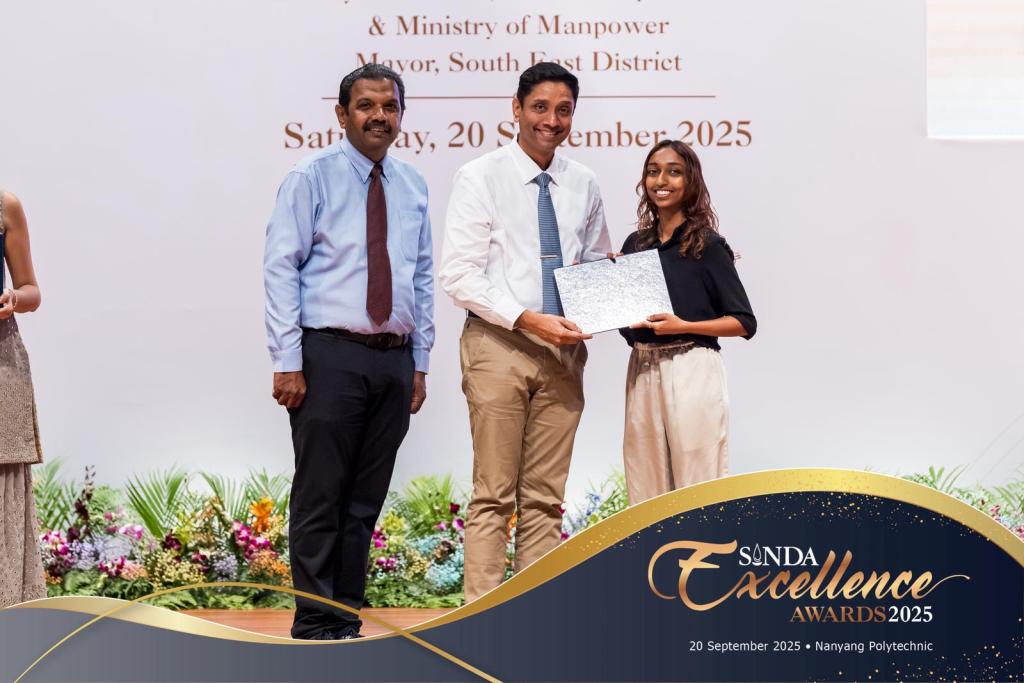
We are proud to share that our PhD student Vrinda has been recognised with the prestigious SINDA Excellence Award (SEA) 2025 for attaining a Degree with Highest Distinction.
The ceremony was held on 20 September 2025 at Nanyang Polytechnic and graced by Mr Dinesh Vasu Dash, Member of Parliament for East Coast GRC, Mayor of South East District, and Minister of State for Culture, Community and Youth & Ministry of Manpower, who served as the Guest of Honour.
The SINDA Excellence Awards are presented annually to members of the Indian community who have demonstrated exceptional academic achievement, resilience, and leadership. Receiving this award places Vrinda among the brightest young scholars in Singapore, celebrating not just her outstanding results but also her determination and perseverance.
Alongside this national recognition, Vrinda has also received:
🏅 NUS JTC Medal & Prize (Engineering) – awarded for the best final year project addressing the theme of innovation.
🏅 “Most Challenging Project” Award at the EDIC Project Showcase 2025 (College of Design and Engineering) – recognising her persistence and success in delivering one of the most complex and demanding projects of her academic journey
Vrinda’s journey reflects not only academic excellence but also resilience, creativity, and innovation in research. Her achievements are a shining example of what can be accomplished through hard work and dedication, inspiring fellow students and the wider community to pursue excellence in every endeavour. Team Eye N’ Brain is proud of you!
The ceremony was held on 20 September 2025 at Nanyang Polytechnic and graced by Mr Dinesh Vasu Dash, Member of Parliament for East Coast GRC, Mayor of South East District, and Minister of State for Culture, Community and Youth & Ministry of Manpower, who served as the Guest of Honour.
The SINDA Excellence Awards are presented annually to members of the Indian community who have demonstrated exceptional academic achievement, resilience, and leadership. Receiving this award places Vrinda among the brightest young scholars in Singapore, celebrating not just her outstanding results but also her determination and perseverance.
Alongside this national recognition, Vrinda has also received:
🏅 NUS JTC Medal & Prize (Engineering) – awarded for the best final year project addressing the theme of innovation.
🏅 Most Challenging Project Award – recognising her persistence and success in delivering one of the most complex and demanding projects of her academic journey
The session drew a keen audience of researchers and students, who actively engaged during the Q&A segment. His insights sparked discussions on how these findings could be applied in vision research, clinical practice, and even everyday life.
The World Sleep Congress is one of the largest international gatherings dedicated to advancing knowledge in sleep science, medicine, and technology. It brings together researchers, clinicians, and innovators from across the globe to exchange insights and showcase new discoveries in the field.
During the congress, Daniella had the opportunity to engage with experts in the field, receive valuable feedback on her work, and contribute to the growing conversation around light-based strategies for sleep and circadian health.
Dr. Raymond Najjar delivered a compelling talk on the impact of light exposure on myopia progression, shedding light on how environmental and optical factors shape visual development—a timely topic as myopia rates continue to rise worldwide.
Our team was also proud to showcase two impactful poster presentations. Dr. Murali presented his work on the synergistic effects of atropine and bright light in controlling lens-induced myopia in chickens, offering new insights into potential interventions for childhood myopia. PhD student Daniella Mahfoud presented her research on pupillometric features of ocular recovery following transsphenoidal surgery in patients with pituitary adenoma, highlighting the clinical value of pupillometry in tracking visual function and recovery.
During the session, Mr. Paolini highlighted how programmable spectrum sources offer multiple solutions for achieving the same correlated color temperature (CCT). He emphasized that daylight is the gold standard for lighting but also a complex and continuously changing spectrum. He explained that while daylight locus is sometimes representative of daylight, it does not fully capture its variability.
Mr. Paolini also pointed out that daylight CCTs are significantly higher than most electric lights, even during sunrise and sunset. He stressed the importance of deep red wavelengths (>650nm) for high CCT acceptance and accurate skin color representation. Lastly, he underscored the need to focus on radiometry, as photometry alone is insufficient for understanding daylight.Photo credits: Ms Janie Tay
Prof. Claude Gronfier Visits Eye N’ Brain Research Lab| September 2025
Prof Gronfier is internationally recognised for his work on circadian biology and the impact of light on human physiology. In his talk, he discussed how light influences not only our circadian rhythms but also a range of non-circadian functions, shaping everything from alertness and cognition to long-term health outcomes.
We were honoured to host Prof Claude Gronfier (Inserm, Lyon, France) at the Eye N Brain Research Group for an engaging seminar on “Circadian AND non-circadian effects of light in humans.”
Prof Gronfier is internationally recognised for his work on circadian biology and the impact of light on human physiology. In his talk, he discussed how light influences not only our circadian rhythms but also a range of non-circadian functions, shaping everything from alertness and cognition to long-term health outcomes.
The session drew a keen audience of research staffs and students, who actively engaged during the Q&A segment. His insights sparked discussions on how these findings could be applied in vision research, clinical practice, and even everyday life.
We extend our sincere thanks to Prof Gronfier for sharing his expertise and for inspiring our team with new perspectives on the vital role of light in human health.
The session drew a keen audience of researchers and students, who actively engaged during the Q&A segment. His insights sparked discussions on how these findings could be applied in vision research, clinical practice, and even everyday life.
The World Sleep Congress is one of the largest international gatherings dedicated to advancing knowledge in sleep science, medicine, and technology. It brings together researchers, clinicians, and innovators from across the globe to exchange insights and showcase new discoveries in the field.
During the congress, Daniella had the opportunity to engage with experts in the field, receive valuable feedback on her work, and contribute to the growing conversation around light-based strategies for sleep and circadian health.
Dr. Raymond Najjar delivered a compelling talk on the impact of light exposure on myopia progression, shedding light on how environmental and optical factors shape visual development—a timely topic as myopia rates continue to rise worldwide.
Our team was also proud to showcase two impactful poster presentations. Dr. Murali presented his work on the synergistic effects of atropine and bright light in controlling lens-induced myopia in chickens, offering new insights into potential interventions for childhood myopia. PhD student Daniella Mahfoud presented her research on pupillometric features of ocular recovery following transsphenoidal surgery in patients with pituitary adenoma, highlighting the clinical value of pupillometry in tracking visual function and recovery.
During the session, Mr. Paolini highlighted how programmable spectrum sources offer multiple solutions for achieving the same correlated color temperature (CCT). He emphasized that daylight is the gold standard for lighting but also a complex and continuously changing spectrum. He explained that while daylight locus is sometimes representative of daylight, it does not fully capture its variability.
Mr. Paolini also pointed out that daylight CCTs are significantly higher than most electric lights, even during sunrise and sunset. He stressed the importance of deep red wavelengths (>650nm) for high CCT acceptance and accurate skin color representation. Lastly, he underscored the need to focus on radiometry, as photometry alone is insufficient for understanding daylight.Photo credits: Ms Janie Tay


PhD Student Daniella Mahfoud Presents at World Sleep Congress 2025| September 2025
This week, PhD student Daniella Mahfoud from the Yong Loo Lin School of Medicine, National University of Singapore (NUS), presented her research at the World Sleep Congress 2025, held in Singapore from September 5–10, 2025.
The World Sleep Congress is one of the largest international gatherings dedicated to advancing knowledge in sleep science, medicine, and technology. It brings together researchers, clinicians, and innovators from across the globe to exchange insights and showcase new discoveries in the field.
During the congress, Daniella had the opportunity to engage with experts in the field, receive valuable feedback on her work, and contribute to the growing conversation around light-based strategies for sleep and circadian health.
Her participation not only showcased NUS’s innovative research but also underscored the importance of developing practical, accessible solutions to improve sleep and overall well-being in today’s digital world.
The World Sleep Congress is one of the largest international gatherings dedicated to advancing knowledge in sleep science, medicine, and technology. It brings together researchers, clinicians, and innovators from across the globe to exchange insights and showcase new discoveries in the field.
During the congress, Daniella had the opportunity to engage with experts in the field, receive valuable feedback on her work, and contribute to the growing conversation around light-based strategies for sleep and circadian health.
Dr. Raymond Najjar delivered a compelling talk on the impact of light exposure on myopia progression, shedding light on how environmental and optical factors shape visual development—a timely topic as myopia rates continue to rise worldwide.
Our team was also proud to showcase two impactful poster presentations. Dr. Murali presented his work on the synergistic effects of atropine and bright light in controlling lens-induced myopia in chickens, offering new insights into potential interventions for childhood myopia. PhD student Daniella Mahfoud presented her research on pupillometric features of ocular recovery following transsphenoidal surgery in patients with pituitary adenoma, highlighting the clinical value of pupillometry in tracking visual function and recovery.
During the session, Mr. Paolini highlighted how programmable spectrum sources offer multiple solutions for achieving the same correlated color temperature (CCT). He emphasized that daylight is the gold standard for lighting but also a complex and continuously changing spectrum. He explained that while daylight locus is sometimes representative of daylight, it does not fully capture its variability.
Mr. Paolini also pointed out that daylight CCTs are significantly higher than most electric lights, even during sunrise and sunset. He stressed the importance of deep red wavelengths (>650nm) for high CCT acceptance and accurate skin color representation. Lastly, he underscored the need to focus on radiometry, as photometry alone is insufficient for understanding daylight.Photo credits: Ms Janie Tay


🎓 NUS BME Commencement 2025: A Proud Day for Eye N’ Brain 2025| July 2025
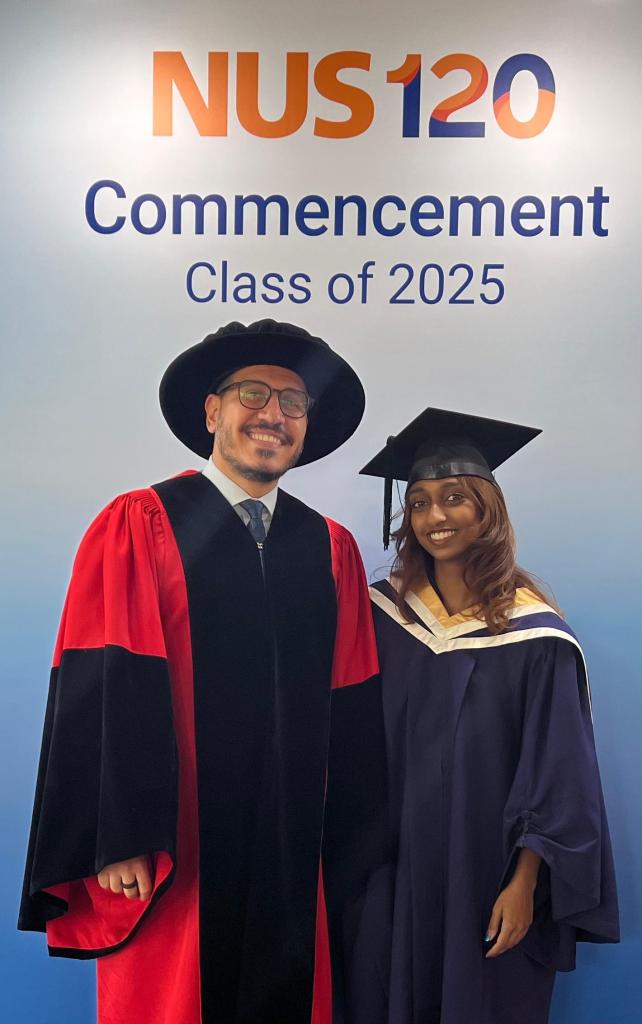
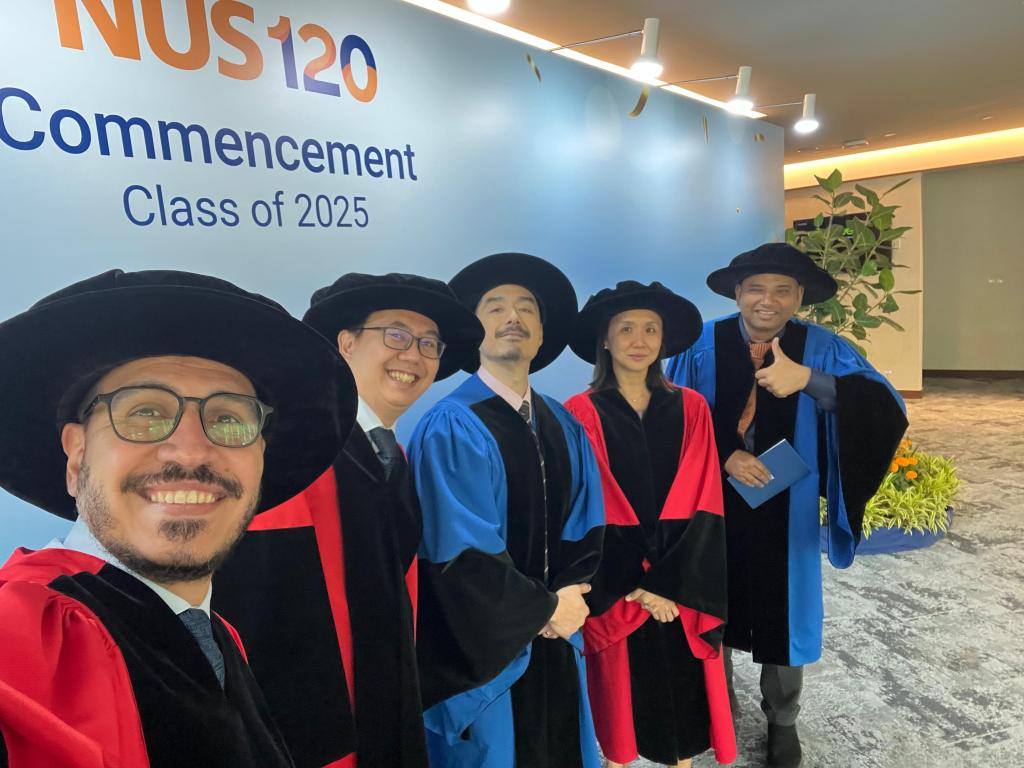
The NUS Biomedical Engineering Commencement Ceremony 2025 was a proud and memorable occasion for the Eye N’ Brain team! 👨🏫 Dr Raymond Najjar had the honour of joining the academic procession, representing NUS BME alongside fellow faculty members. It was a moment of recognition for his contributions as an educator and mentor — and a meaningful way to celebrate the academic journey of this year’s graduating class. 🎉 Among those graduates was Vrinda, a key member of our lab, who completed her degree with flying colors. We’re beyond excited that she’ll be staying on with us as a PhD student, continuing her impactful work in vision science and brain research. We celebrate not just academic achievements, but also the spirit of growth, mentorship, and community that defines NUS BME. Congratulations to all graduates!
Dr. Raymond Najjar delivered a compelling talk on the impact of light exposure on myopia progression, shedding light on how environmental and optical factors shape visual development—a timely topic as myopia rates continue to rise worldwide.
Our team was also proud to showcase two impactful poster presentations. Dr. Murali presented his work on the synergistic effects of atropine and bright light in controlling lens-induced myopia in chickens, offering new insights into potential interventions for childhood myopia. PhD student Daniella Mahfoud presented her research on pupillometric features of ocular recovery following transsphenoidal surgery in patients with pituitary adenoma, highlighting the clinical value of pupillometry in tracking visual function and recovery.
During the session, Mr. Paolini highlighted how programmable spectrum sources offer multiple solutions for achieving the same correlated color temperature (CCT). He emphasized that daylight is the gold standard for lighting but also a complex and continuously changing spectrum. He explained that while daylight locus is sometimes representative of daylight, it does not fully capture its variability.
Mr. Paolini also pointed out that daylight CCTs are significantly higher than most electric lights, even during sunrise and sunset. He stressed the importance of deep red wavelengths (>650nm) for high CCT acceptance and accurate skin color representation. Lastly, he underscored the need to focus on radiometry, as photometry alone is insufficient for understanding daylight.Photo credits: Ms Janie Tay
Celebrating Excellence: Eric Jin Takes Home Best Oral Award| July 2025
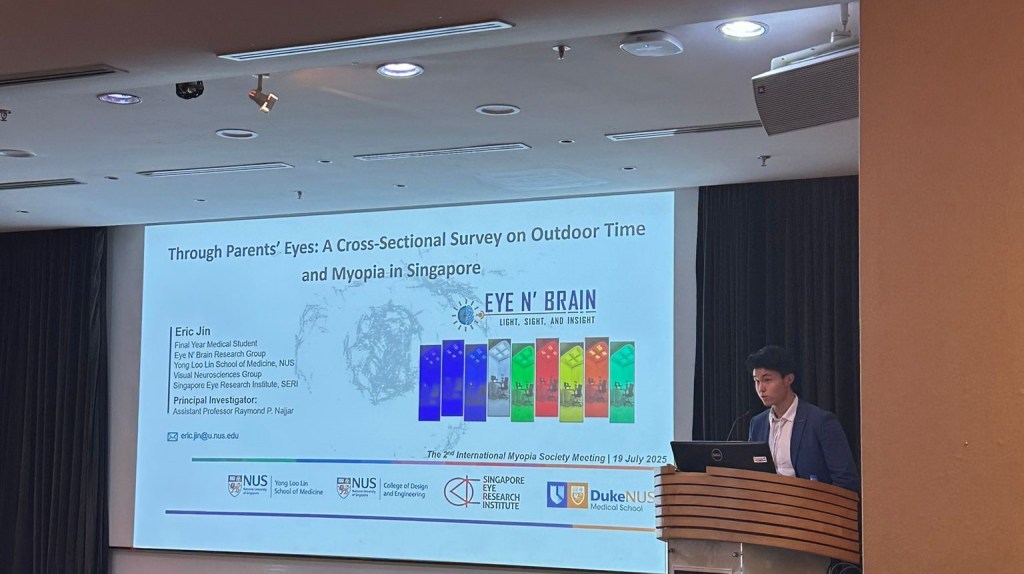
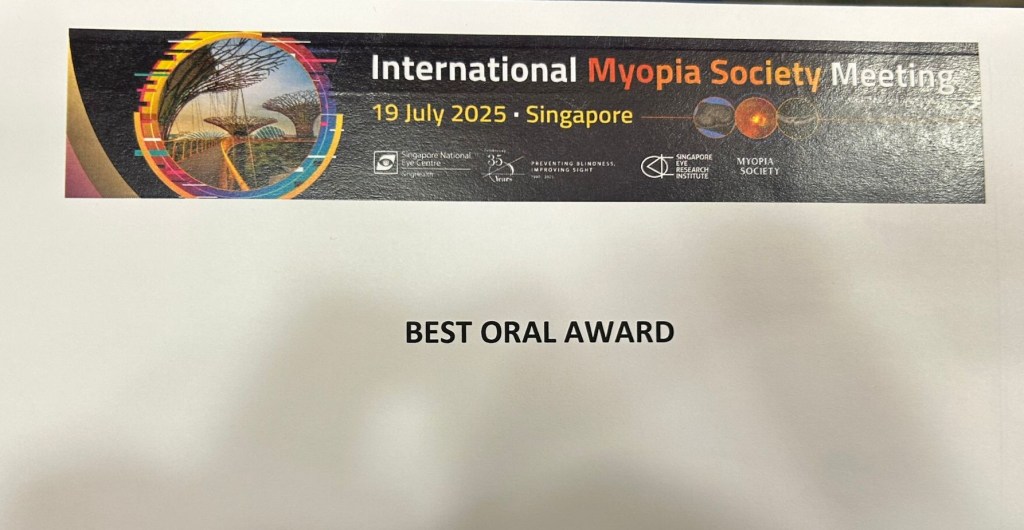
We’re delighted to celebrate Eric Jin for winning the Best Oral Communication Award at the International Myopia Society Meeting, held on 19 July 2025 at the Singapore National Eye Centre (SNEC). Presenting his study titled “Through Parents’ Eyes: A Cross-Sectional Survey on Outdoor Time and Myopia in Singapore,” Eric explored how parents’ perceptions of their children’s outdoor activities relate to myopia trends. His thoughtful approach brought new perspective to tackling a growing public health concern in Singapore and across Asia. This recognition is especially meaningful as Eric is just at the start of his medical journey — a first-year student working under the mentorship of Dr Raymond P Najjar with the Eye N’ Brain Research Group, and supported by collaborators from SERI, NUS, and Duke-NUS Medical School. 🏆 The award is a strong testament to Eric’s communication skills, curiosity, and commitment to impactful research. Congratulations, Eric — we’re excited to see what comes next!
Dr. Raymond Najjar delivered a compelling talk on the impact of light exposure on myopia progression, shedding light on how environmental and optical factors shape visual development—a timely topic as myopia rates continue to rise worldwide.
Our team was also proud to showcase two impactful poster presentations. Dr. Murali presented his work on the synergistic effects of atropine and bright light in controlling lens-induced myopia in chickens, offering new insights into potential interventions for childhood myopia. PhD student Daniella Mahfoud presented her research on pupillometric features of ocular recovery following transsphenoidal surgery in patients with pituitary adenoma, highlighting the clinical value of pupillometry in tracking visual function and recovery.
During the session, Mr. Paolini highlighted how programmable spectrum sources offer multiple solutions for achieving the same correlated color temperature (CCT). He emphasized that daylight is the gold standard for lighting but also a complex and continuously changing spectrum. He explained that while daylight locus is sometimes representative of daylight, it does not fully capture its variability.
Mr. Paolini also pointed out that daylight CCTs are significantly higher than most electric lights, even during sunrise and sunset. He stressed the importance of deep red wavelengths (>650nm) for high CCT acceptance and accurate skin color representation. Lastly, he underscored the need to focus on radiometry, as photometry alone is insufficient for understanding daylight.Photo credits: Ms Janie Tay
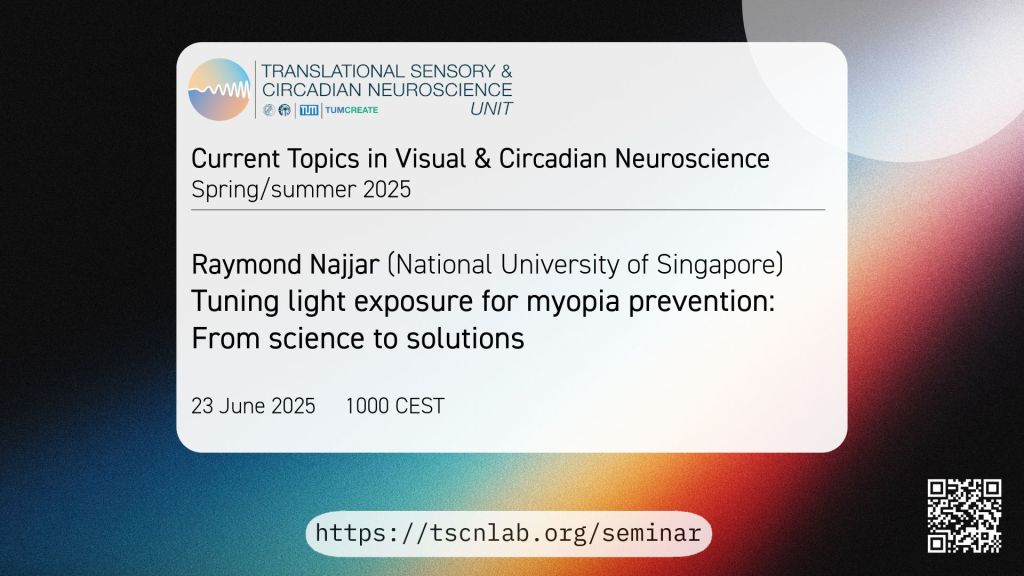
Visual & Circadian Neuroscience Seminar| June 2025
Title: Tuning Light Exposure for Myopia Prevention by Dr Raymond Najjar
On Monday, 23 June 2025, Dr. Raymond Najjar from the National University of Singapore delivered an engaging online talk as part of the Current Topics in Visual & Circadian Neuroscience seminar series. This series, curated by the Translational Sensory & Circadian Neuroscience Unit (a joint initiative of MPS, TUM, and TUMCREATE led by Prof. Dr. Manuel Spitschan), brings together global researchers working at the interface of vision, light, and the brain.
In his session titled “Tuning Light Exposure for Myopia Prevention: From Science to Solutions,” Dr. Najjar explored how controlled light exposure can influence eye growth and refractive development, shedding light on promising approaches for myopia prevention. With myopia rates surging globally, especially among younger populations in Asia, this timely talk bridged fundamental science and applied strategies for public health impact.
Dr. Raymond Najjar delivered a compelling talk on the impact of light exposure on myopia progression, shedding light on how environmental and optical factors shape visual development—a timely topic as myopia rates continue to rise worldwide.
Our team was also proud to showcase two impactful poster presentations. Dr. Murali presented his work on the synergistic effects of atropine and bright light in controlling lens-induced myopia in chickens, offering new insights into potential interventions for childhood myopia. PhD student Daniella Mahfoud presented her research on pupillometric features of ocular recovery following transsphenoidal surgery in patients with pituitary adenoma, highlighting the clinical value of pupillometry in tracking visual function and recovery.
During the session, Mr. Paolini highlighted how programmable spectrum sources offer multiple solutions for achieving the same correlated color temperature (CCT). He emphasized that daylight is the gold standard for lighting but also a complex and continuously changing spectrum. He explained that while daylight locus is sometimes representative of daylight, it does not fully capture its variability.
Mr. Paolini also pointed out that daylight CCTs are significantly higher than most electric lights, even during sunrise and sunset. He stressed the importance of deep red wavelengths (>650nm) for high CCT acceptance and accurate skin color representation. Lastly, he underscored the need to focus on radiometry, as photometry alone is insufficient for understanding daylight.Photo credits: Ms Janie Tay
Showcasing Innovation at NUH Population Health Day| June 2025
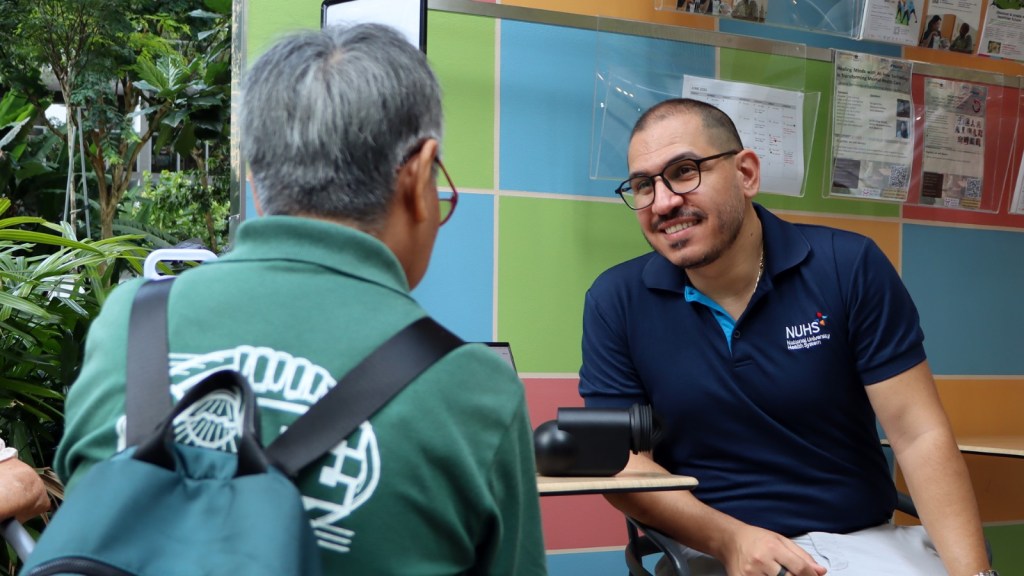
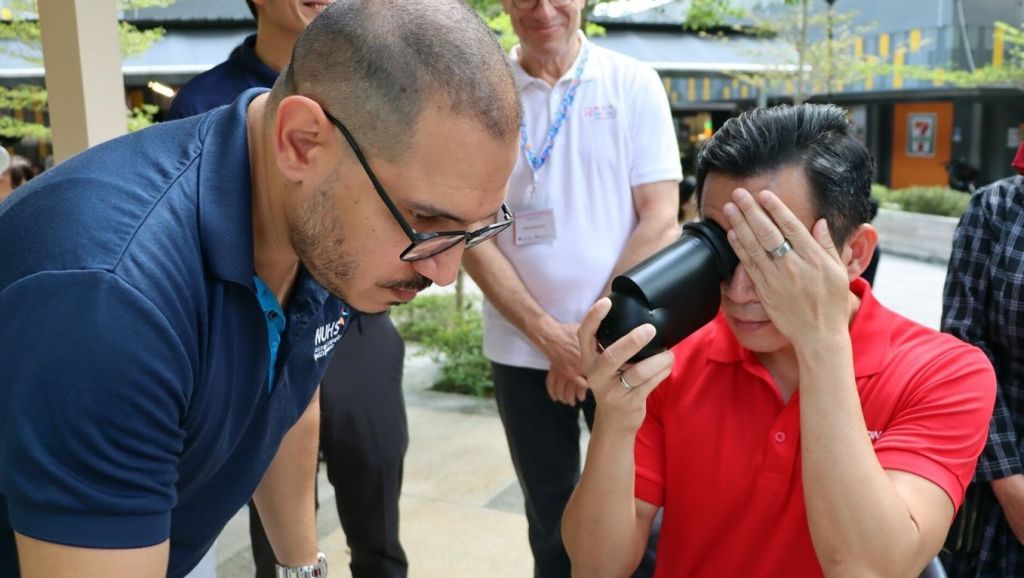
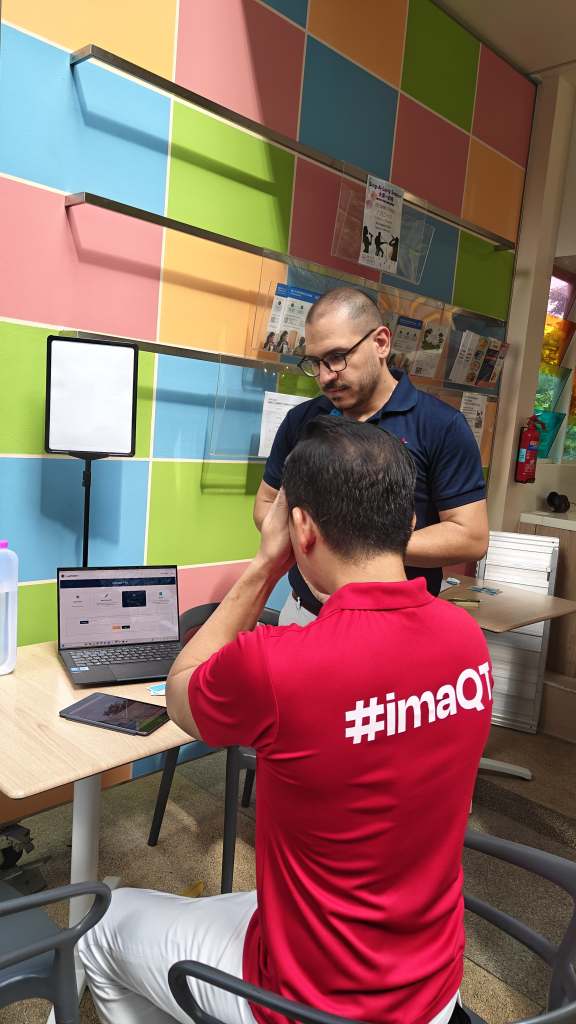
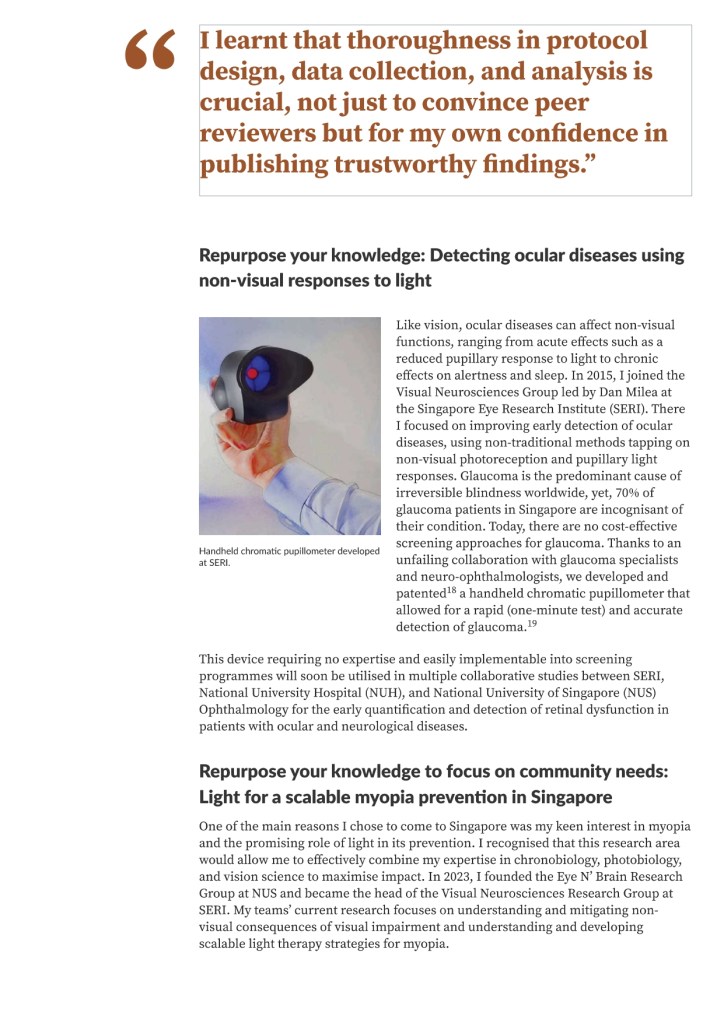
We were delighted to participate in the NUH Population Health Day and showcase our Handheld Chromatic Pupillometer (HCP)—an innovative tool that brings neuroscience closer to everyday health.
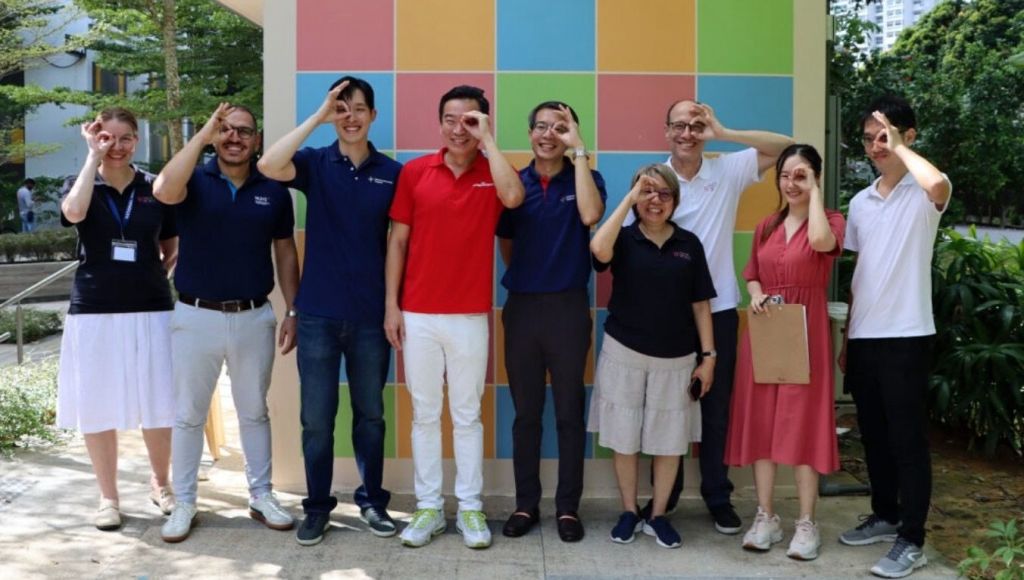
Representing the Eye N Brain research group, Dr. Raymond Najjar, Dr. Najiya Sundus Meethal, and Mert Egemen Çalışkan engaged with the public to demonstrate how the HCP works and its potential to support brain and eye health in a practical, accessible way. The event provided a valuable opportunity to interact with the community, raising awareness of how light responses in the eye can offer insights into neurological function. It was encouraging to see such enthusiasm from attendees of all ages, from healthcare professionals to curious members of the public.
We’re proud to be part of a movement that brings research into real-world settings and supports the broader goals of population health through innovation and education. Thank you to National University Hospital Singapore for organizing a meaningful and inspiring event. Stay tuned for more updates from the Eye N Brain team!
Dr. Raymond Najjar delivered a compelling talk on the impact of light exposure on myopia progression, shedding light on how environmental and optical factors shape visual development—a timely topic as myopia rates continue to rise worldwide.
Our team was also proud to showcase two impactful poster presentations. Dr. Murali presented his work on the synergistic effects of atropine and bright light in controlling lens-induced myopia in chickens, offering new insights into potential interventions for childhood myopia. PhD student Daniella Mahfoud presented her research on pupillometric features of ocular recovery following transsphenoidal surgery in patients with pituitary adenoma, highlighting the clinical value of pupillometry in tracking visual function and recovery.
During the session, Mr. Paolini highlighted how programmable spectrum sources offer multiple solutions for achieving the same correlated color temperature (CCT). He emphasized that daylight is the gold standard for lighting but also a complex and continuously changing spectrum. He explained that while daylight locus is sometimes representative of daylight, it does not fully capture its variability.
Mr. Paolini also pointed out that daylight CCTs are significantly higher than most electric lights, even during sunrise and sunset. He stressed the importance of deep red wavelengths (>650nm) for high CCT acceptance and accurate skin color representation. Lastly, he underscored the need to focus on radiometry, as photometry alone is insufficient for understanding daylight.Photo credits: Ms Janie Tay

Highlights from ARVO 2025: Advancing Vision Science Together| May 2025
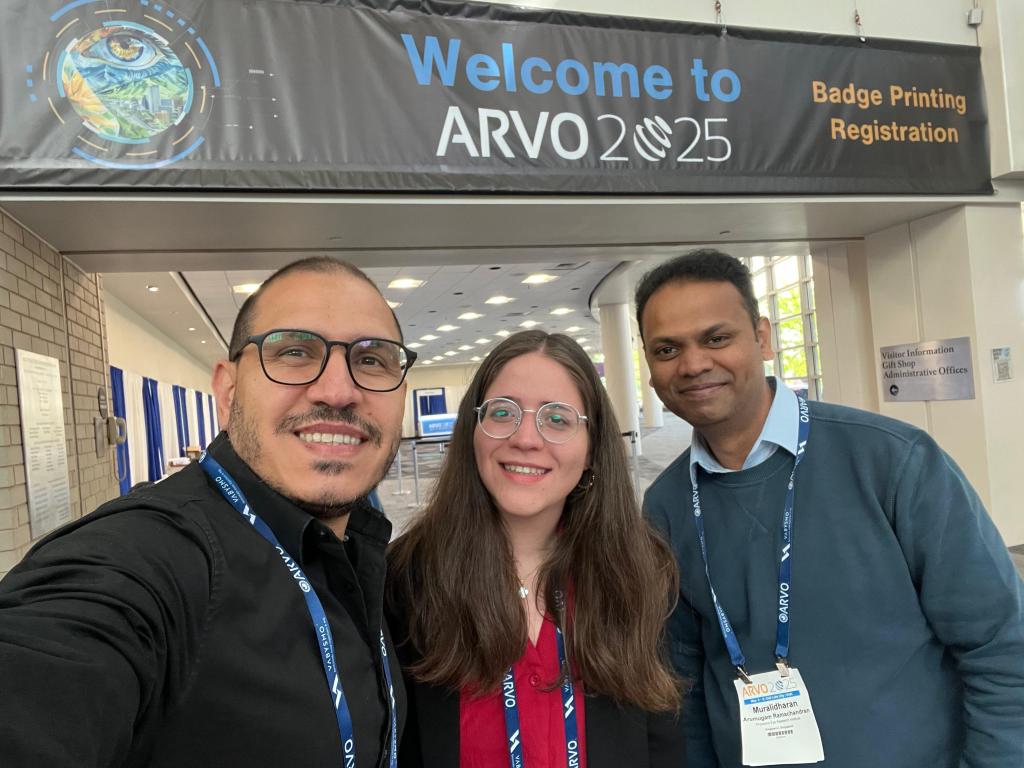
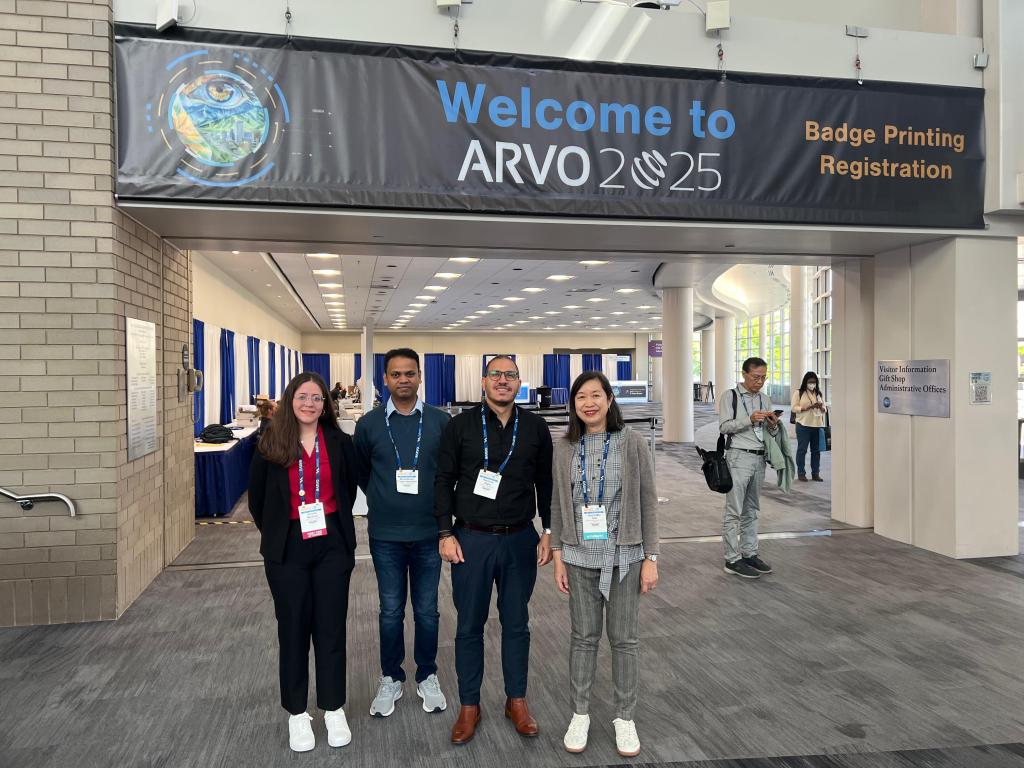
ARVO 2025 was an inspiring gathering of global vision researchers and clinicians, and this year’s event featured exciting contributions from the Singapore Eye & Brain Research Institute team.
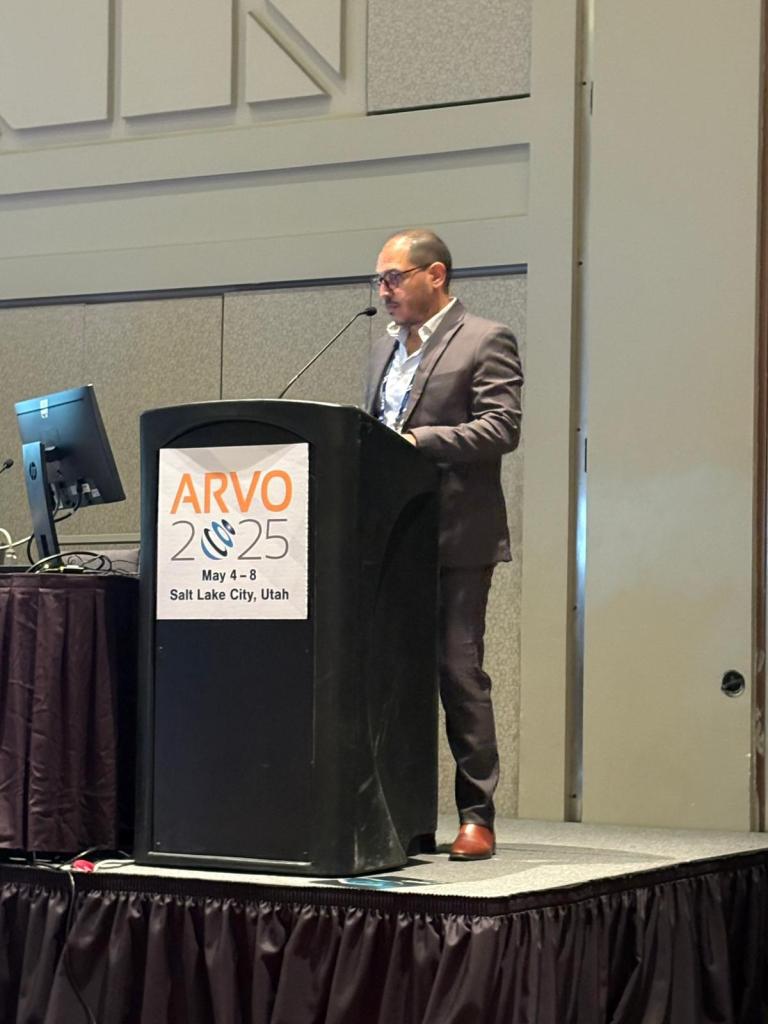
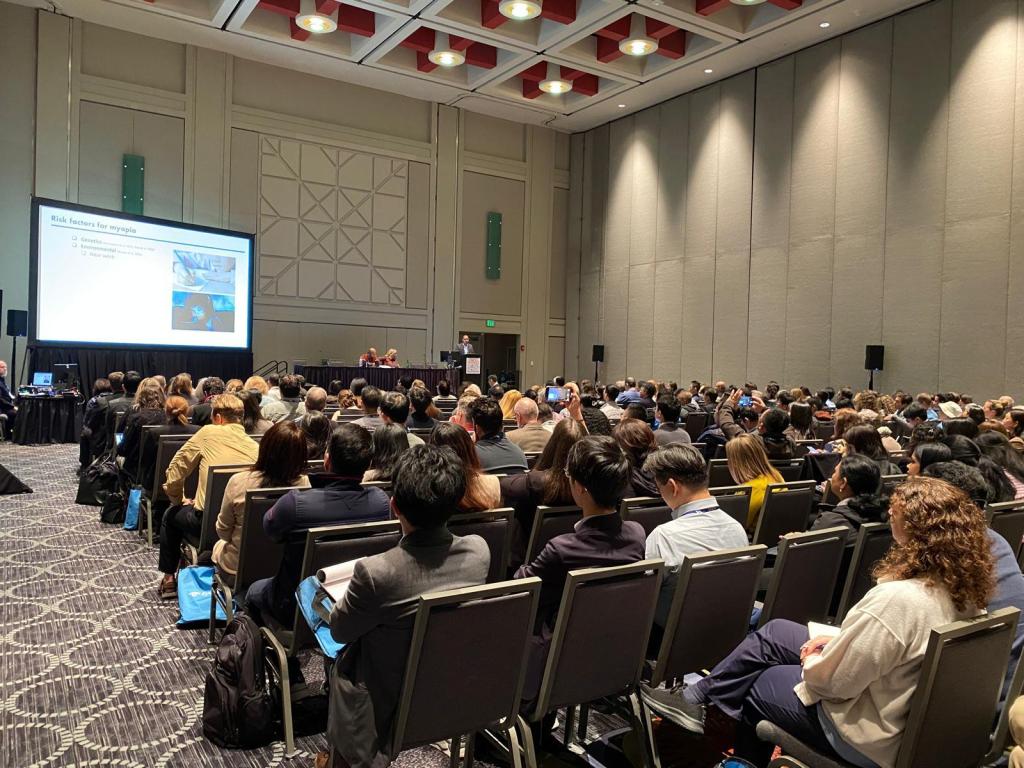
Dr. Raymond Najjar delivered a compelling talk on the impact of light exposure on myopia progression, shedding light on how environmental and optical factors shape visual development—a timely topic as myopia rates continue to rise worldwide.
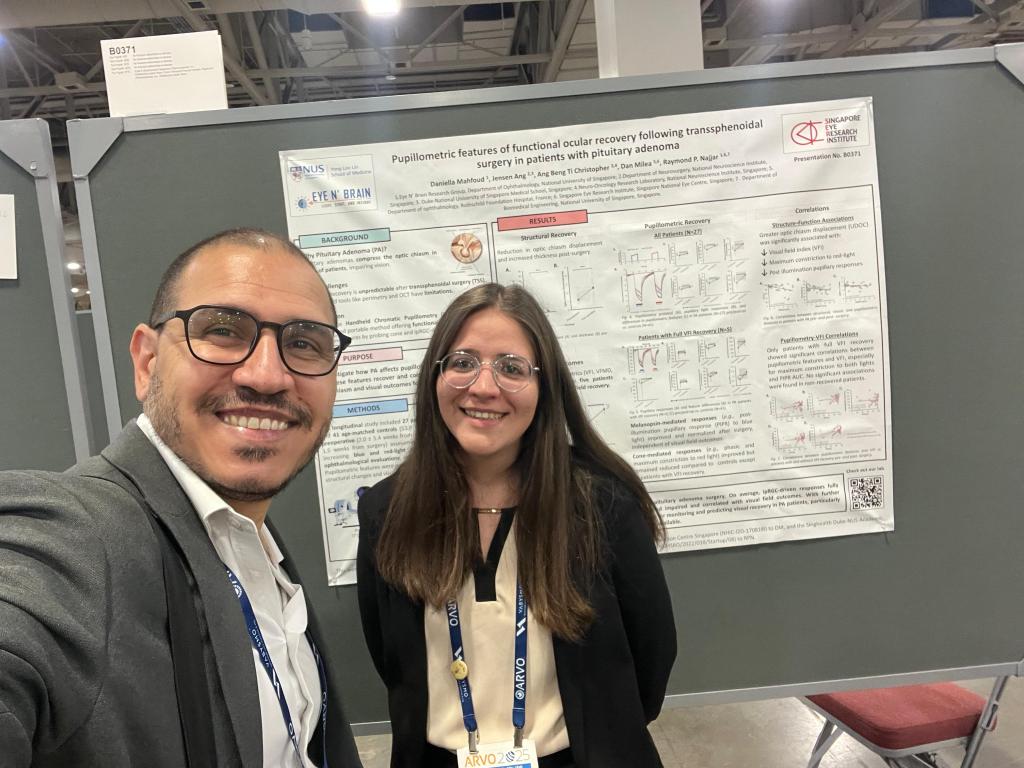
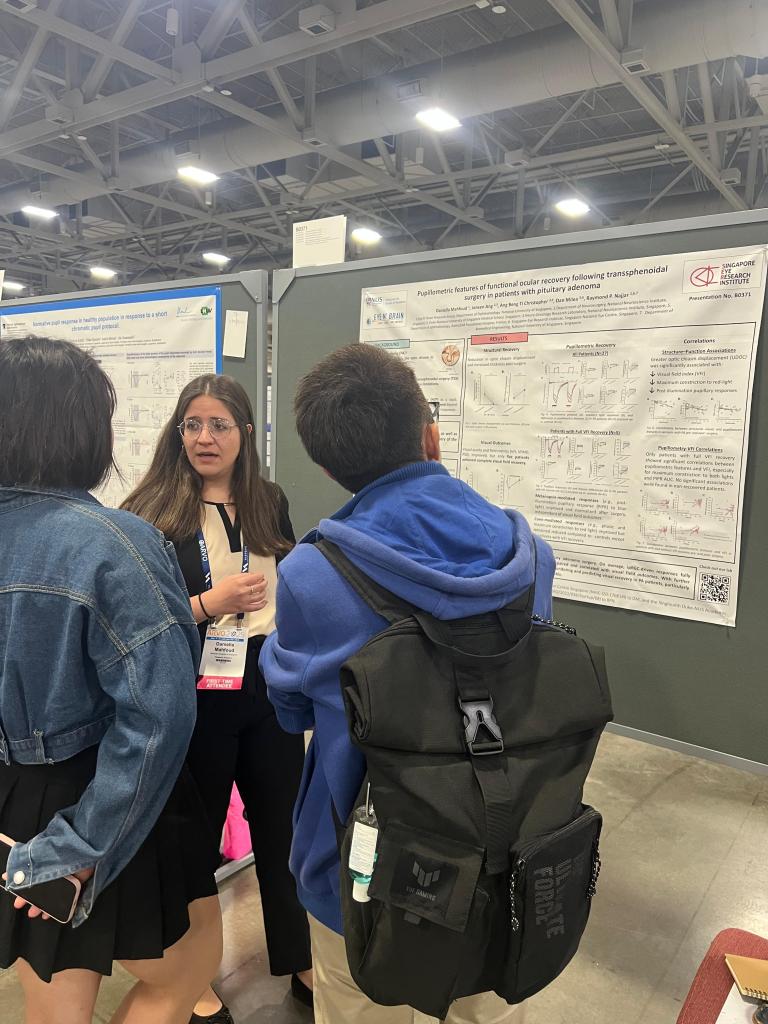
Our team was also proud to showcase two impactful poster presentations. Dr. Murali presented his work on the synergistic effects of atropine and bright light in controlling lens-induced myopia in chickens, offering new insights into potential interventions for childhood myopia. PhD student Daniella Mahfoud presented her research on pupillometric features of ocular recovery following transsphenoidal surgery in patients with pituitary adenoma, highlighting the clinical value of pupillometry in tracking visual function and recovery.
Dr. Raymond Najjar delivered a compelling talk on the impact of light exposure on myopia progression, shedding light on how environmental and optical factors shape visual development—a timely topic as myopia rates continue to rise worldwide.
Our team was also proud to showcase two impactful poster presentations. Dr. Murali presented his work on the synergistic effects of atropine and bright light in controlling lens-induced myopia in chickens, offering new insights into potential interventions for childhood myopia.
PhD student Daniella Mahfoud presented her research on pupillometric features of ocular recovery following transsphenoidal surgery in patients with pituitary adenoma, highlighting the clinical value of pupillometry in tracking visual function and recovery.
The sessions were filled with rich discussions, collaborative energy, and promising ideas for future research. We’re excited to continue building on these advances and thank the ARVO community for another incredible year!
During the session, Mr. Paolini highlighted how programmable spectrum sources offer multiple solutions for achieving the same correlated color temperature (CCT). He emphasized that daylight is the gold standard for lighting but also a complex and continuously changing spectrum. He explained that while daylight locus is sometimes representative of daylight, it does not fully capture its variability.
Mr. Paolini also pointed out that daylight CCTs are significantly higher than most electric lights, even during sunrise and sunset. He stressed the importance of deep red wavelengths (>650nm) for high CCT acceptance and accurate skin color representation. Lastly, he underscored the need to focus on radiometry, as photometry alone is insufficient for understanding daylight.Photo credits: Ms Janie Tay
🎉Congratulations to Our FYP Stars: Vrindha, Divya, and Ying Xuan! | April/ May 2025
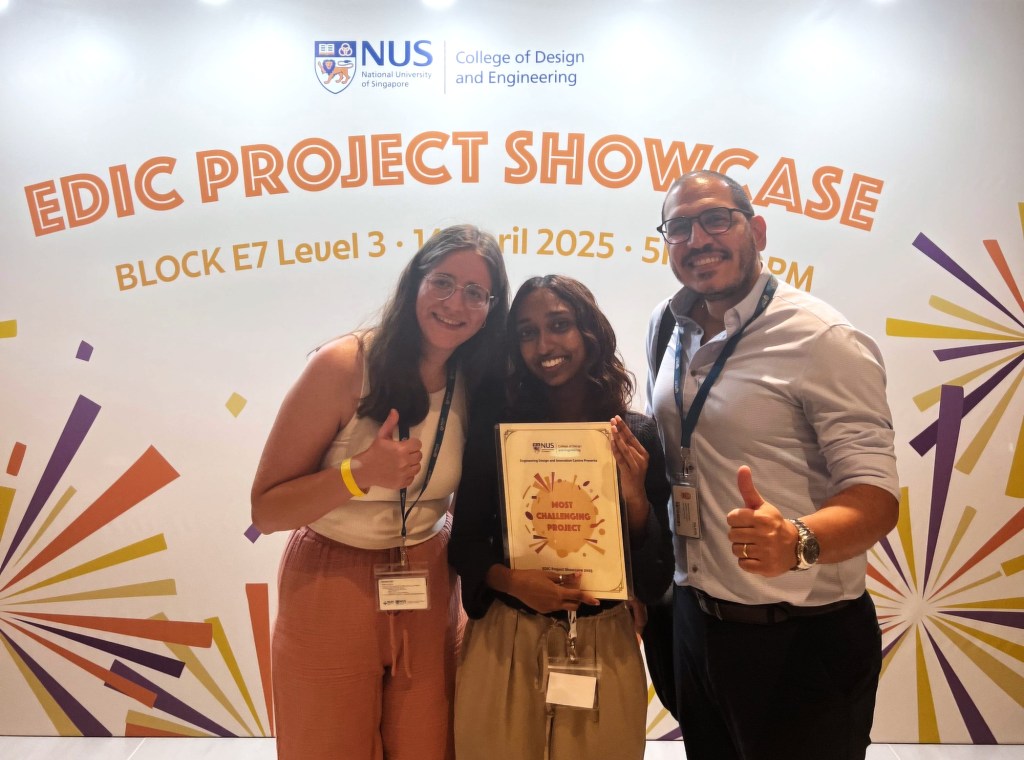
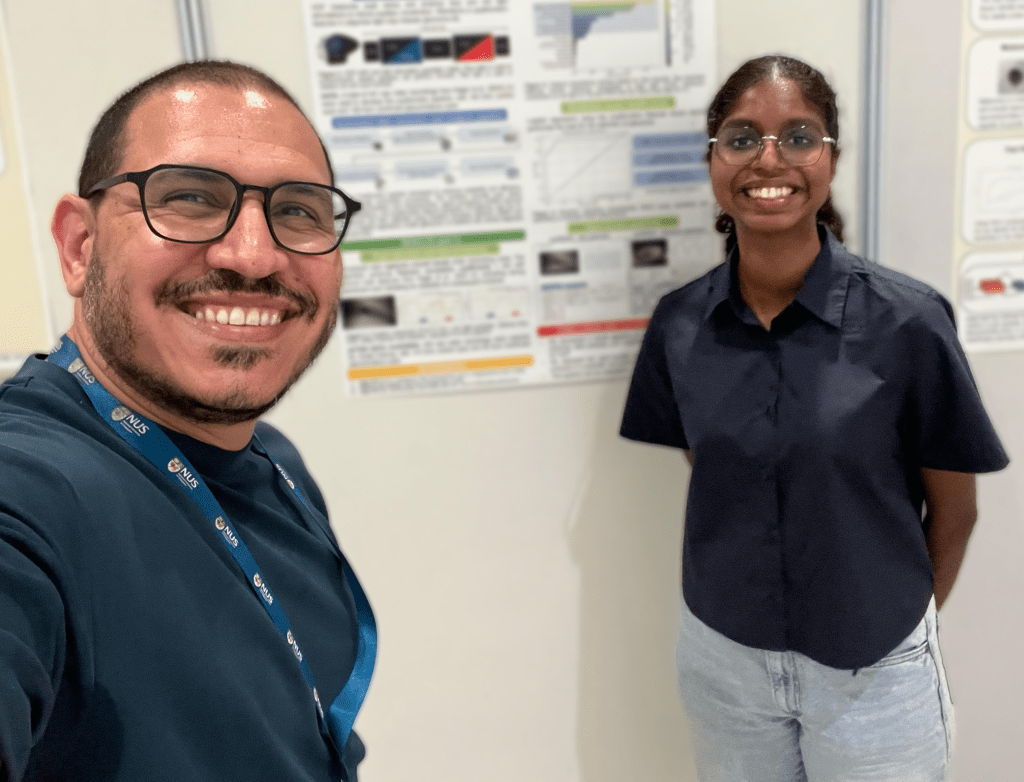
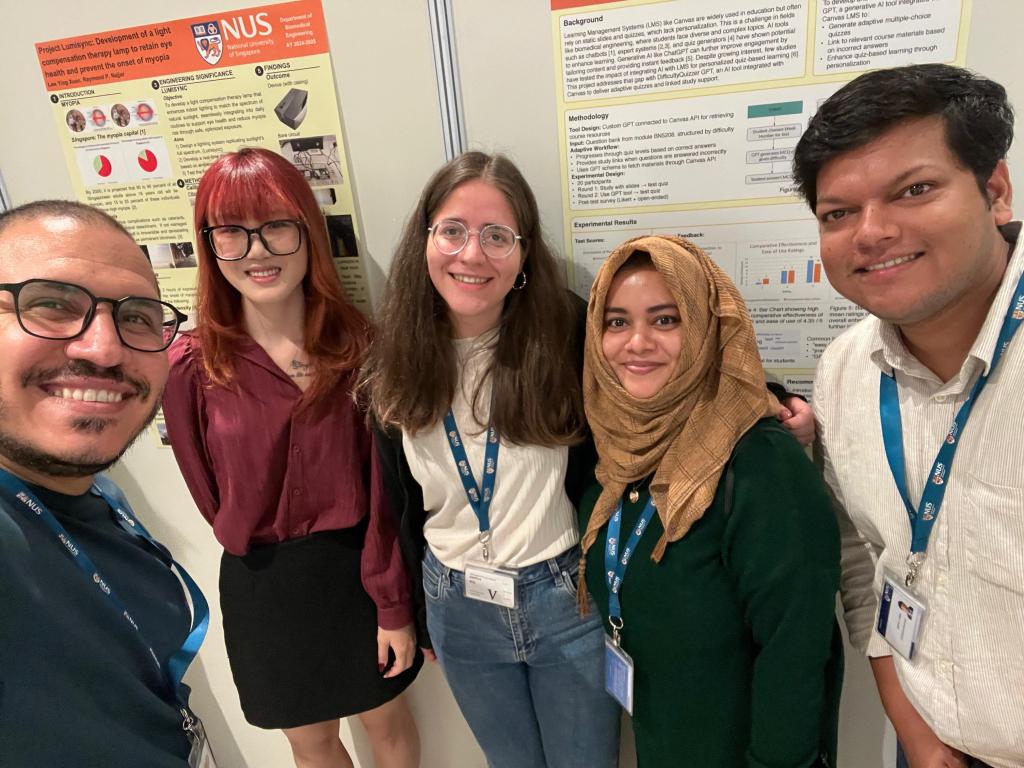
We’re incredibly proud to celebrate the exceptional achievements of our final-year project students — Vrindha, Divya, and Ying Xuan — who recently presented their work at two major showcases at the National University of Singapore.
🌟Vrindha took part in the EDIC Project Showcase 2025 (College of Design and Engineering) and was honoured with the “Most Challenging Project” award. She also received the prestigious NUS JTC Medal & Prize (Engineering) for the best final year project addressing the theme of innovation. Her innovation, persistence, and technical excellence truly stood out!
🌟Divya and Ying Xuan showcased their biomedical innovations at the BME FYP Showcase, impressing attendees with their depth of research and commitment to impactful healthcare solutions.
🌟And a special congratulations to Divya for winning the Best Poster Award at the IEEE EMBS Forum 2025, held at Academia, SGH Campus. Her work continues to gain well-deserved recognition across platforms!
Each of these talented students has demonstrated creativity, dedication, and a strong drive to solve real-world problems — we couldn’t be prouder of their achievements.
Congratulations again, Vrindha, Divya, and Ying Xuan — you’ve made the Eye N Brain Research Group proud! 👏🎓
During the session, Mr. Paolini highlighted how programmable spectrum sources offer multiple solutions for achieving the same correlated color temperature (CCT). He emphasized that daylight is the gold standard for lighting but also a complex and continuously changing spectrum. He explained that while daylight locus is sometimes representative of daylight, it does not fully capture its variability.
Mr. Paolini also pointed out that daylight CCTs are significantly higher than most electric lights, even during sunrise and sunset. He stressed the importance of deep red wavelengths (>650nm) for high CCT acceptance and accurate skin color representation. Lastly, he underscored the need to focus on radiometry, as photometry alone is insufficient for understanding daylight.Photo credits: Ms Janie Tay
A Talk by Steve Paolini, President of Telelumen| February 24th, 2025
Title: Programming Spectrum Luminaires and Measuring Daylight
We were pleased to host Mr. Steve Paolini, President of Telelumen LLC, who delivered an illuminating talk on Programmable Spectrum Luminaires and Measuring Daylight.
During the session, Mr Paolini highlighted how programmable spectrum sources offer multiple solutions for achieving the same correlated colour temperature (CCT). He emphasized that daylight is the gold standard for lighting but also a complex and continuously changing spectrum. He explained that while daylight locus sometimes represents daylight, it does not fully capture its variability
We extend our gratitude to Mr. Paolini for sharing his expertise and for shedding light on the future of precision lighting and human-centric illumination.
During the session, Mr. Paolini highlighted how programmable spectrum sources offer multiple solutions for achieving the same correlated color temperature (CCT). He emphasized that daylight is the gold standard for lighting but also a complex and continuously changing spectrum. He explained that while daylight locus is sometimes representative of daylight, it does not fully capture its variability.
Mr. Paolini also pointed out that daylight CCTs are significantly higher than most electric lights, even during sunrise and sunset. He stressed the importance of deep red wavelengths (>650nm) for high CCT acceptance and accurate skin color representation. Lastly, he underscored the need to focus on radiometry, as photometry alone is insufficient for understanding daylight.Photo credits: Ms Janie Tay


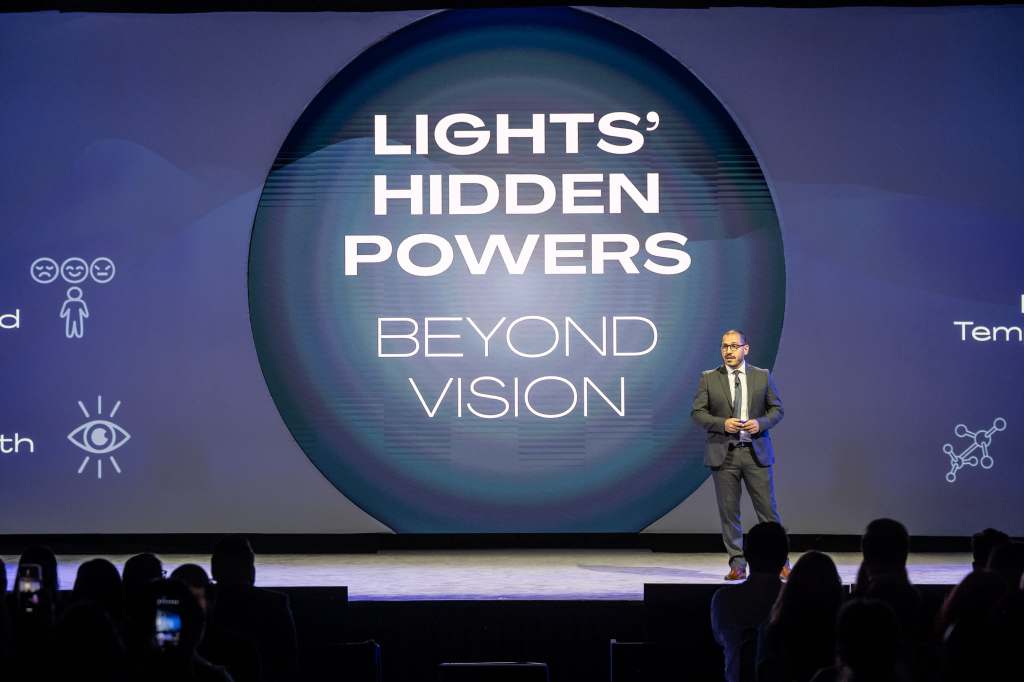
Keynote Lecture, Transitions Academy 2025, Orlando, FL, USA | February 3rd, 2025
Title: The power of light modulation: from the eyes to the brain.
Dr. Najjar as he dives into the fascinating ways light shapes our vision, brain activity, and overall health. Learn how light intensity, color, and timing influence cognition, mood, sleep, and even conditions like migraines and myopia. With insights from advanced brain imaging, this session reveals how light-based therapies could revolutionize eye care and health optimization.
Click here to find out more
Photo credits: Transitions Academy


Medicine NUS (Feb 2025) | February 1st, 2025


2023
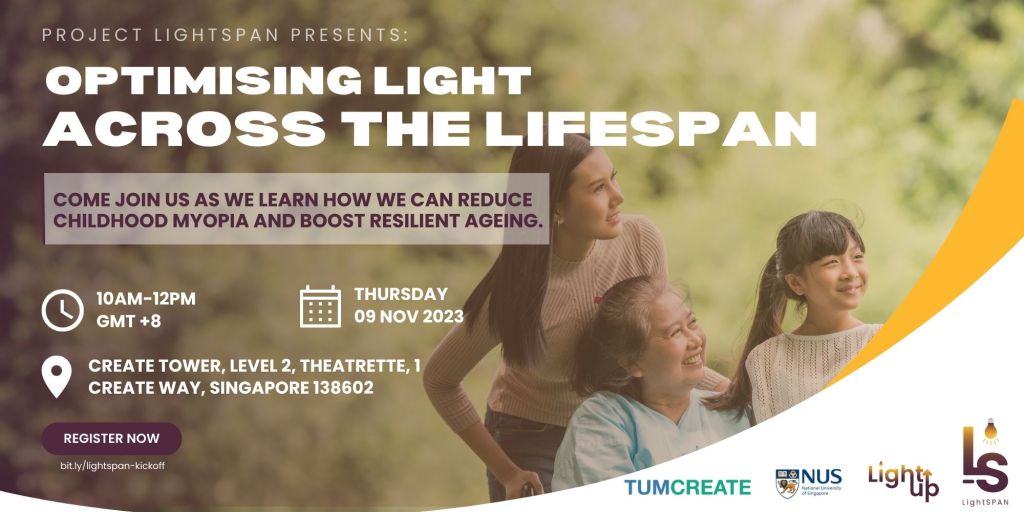
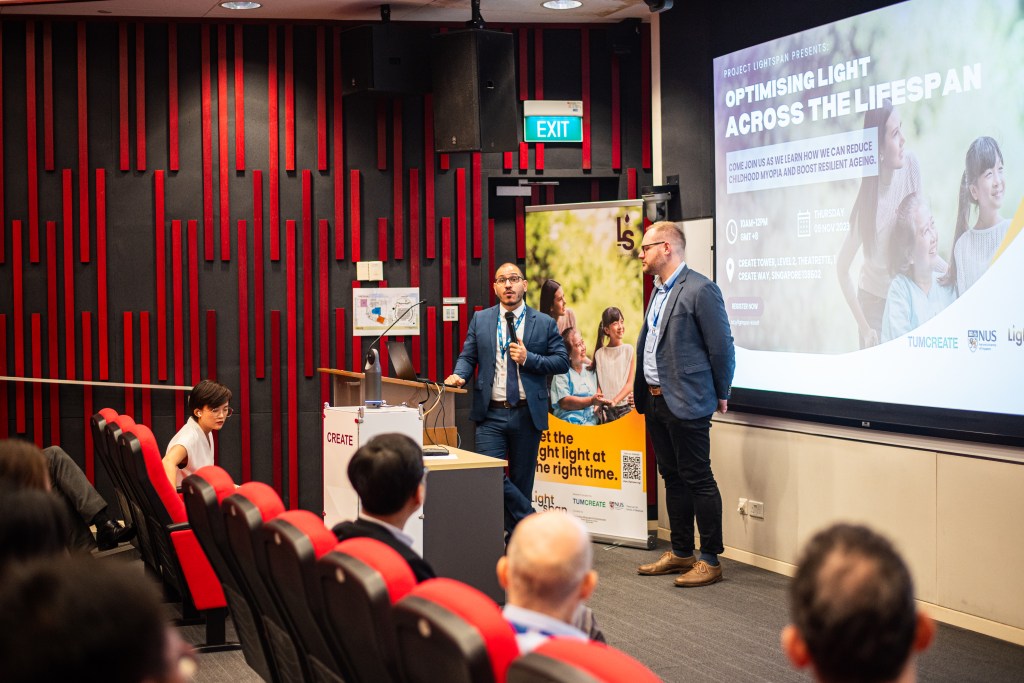
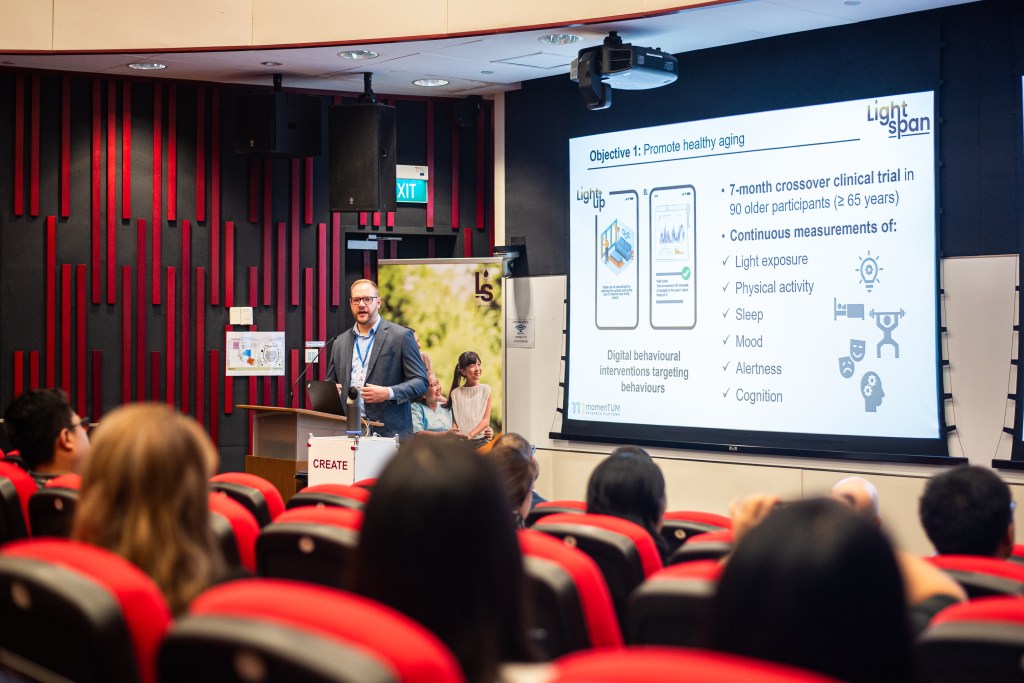
The launch of Project LightSPAN | November 9th, 2023
Light has a profound influence on human health, cognition and well-being. Yet, across one’s lifespan, sub-optimal light exposure is leading to significant health decrements. The optimisation of exposure to light on a daily-basis, can lead to healthier eye and brain development. The LightSPAN Project, funded by the National Research Foundation of Singapore, was launched on November 9th, 2023. The project will investigate how we can optimize light exposure to support health and well-being across the lifespan.
Photo credits: TUMCREATE and Yong Loo Lin School of Medicine

Media appearances
2023
Singapore Tonight (Channel News Asia) | November 9th, 2023
“How much sunlight do you need to reduce risks of myopia? A new sensor will tell you”
Read the full article here
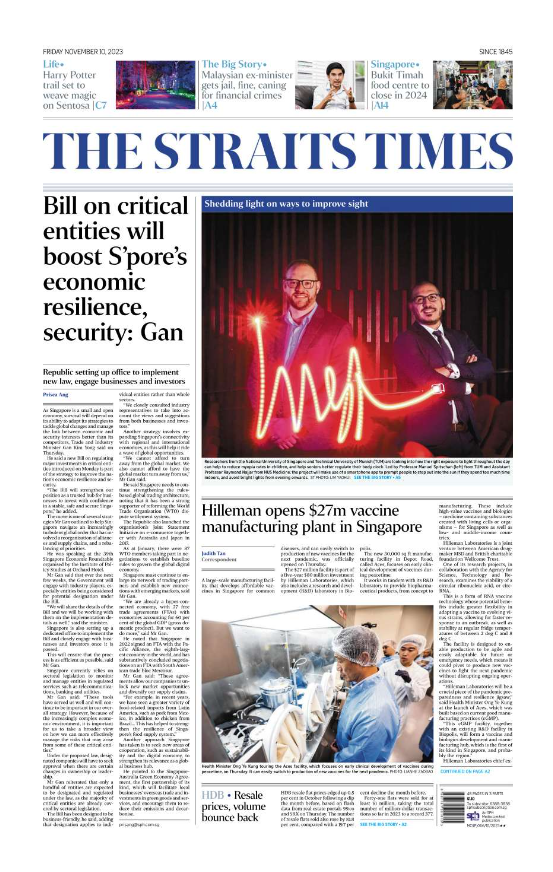
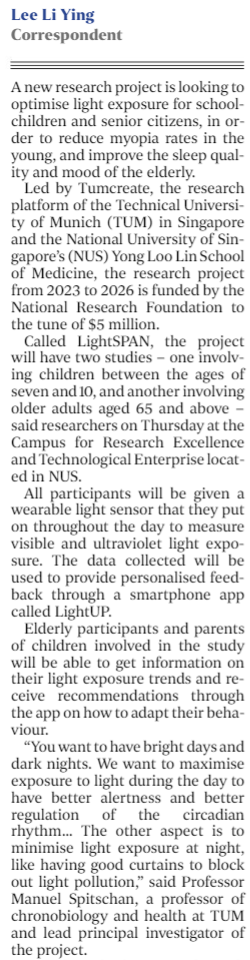
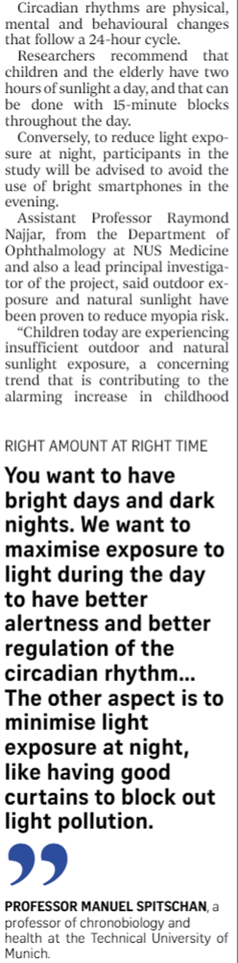
Straits Times | November 10th, 2023
“Study aims to use sunlight to reduce myopia in children, help seniors age better”
Read the full article here
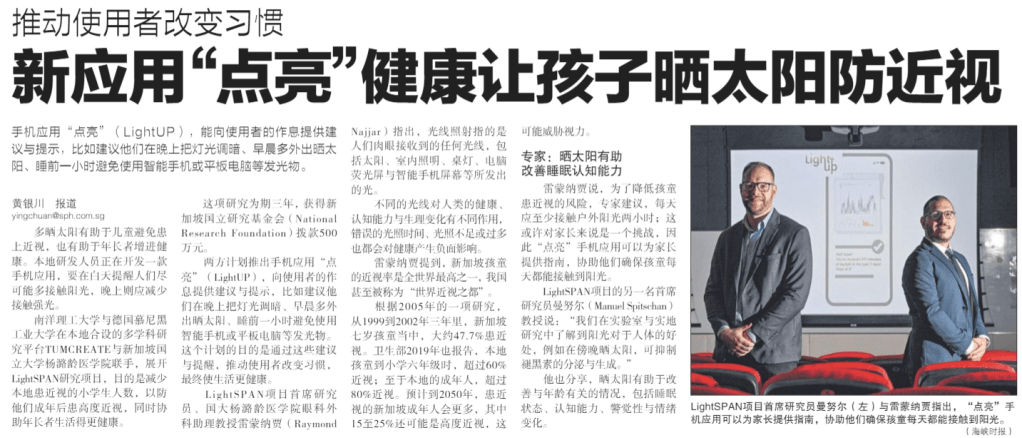
Lianhe Zaobao | November 10th, 2023
“本地研发新应用“点亮” 促家长让孩子多晒太阳防近视 – Singapore develops new app ‘LightUP’ to encourage parents to expose their children to more sunlight to prevent myopia”
Read the full article here
 Eye N Brain